
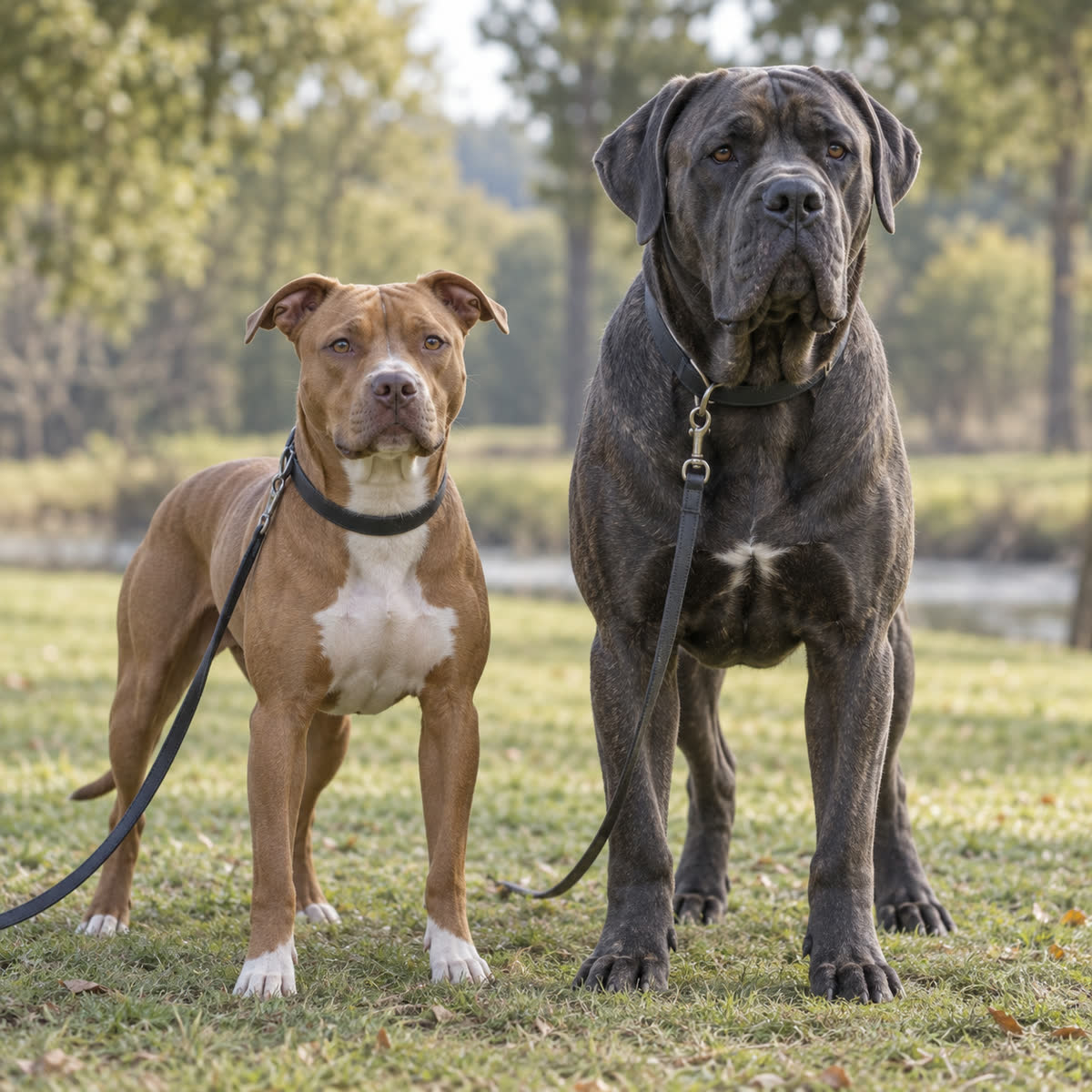
The Cane Corso is a large Italian mastiff-type guardian built for experienced handlers. The Pitbull — most precisely the American Pit Bull Terrier — is a medium-sized, people-focused athlete that suits a wider range of active homes. Both breeds carry real strength and real stigma, and choosing between them comes down to size, temperament, training demands, and what your household and local laws can actually support.
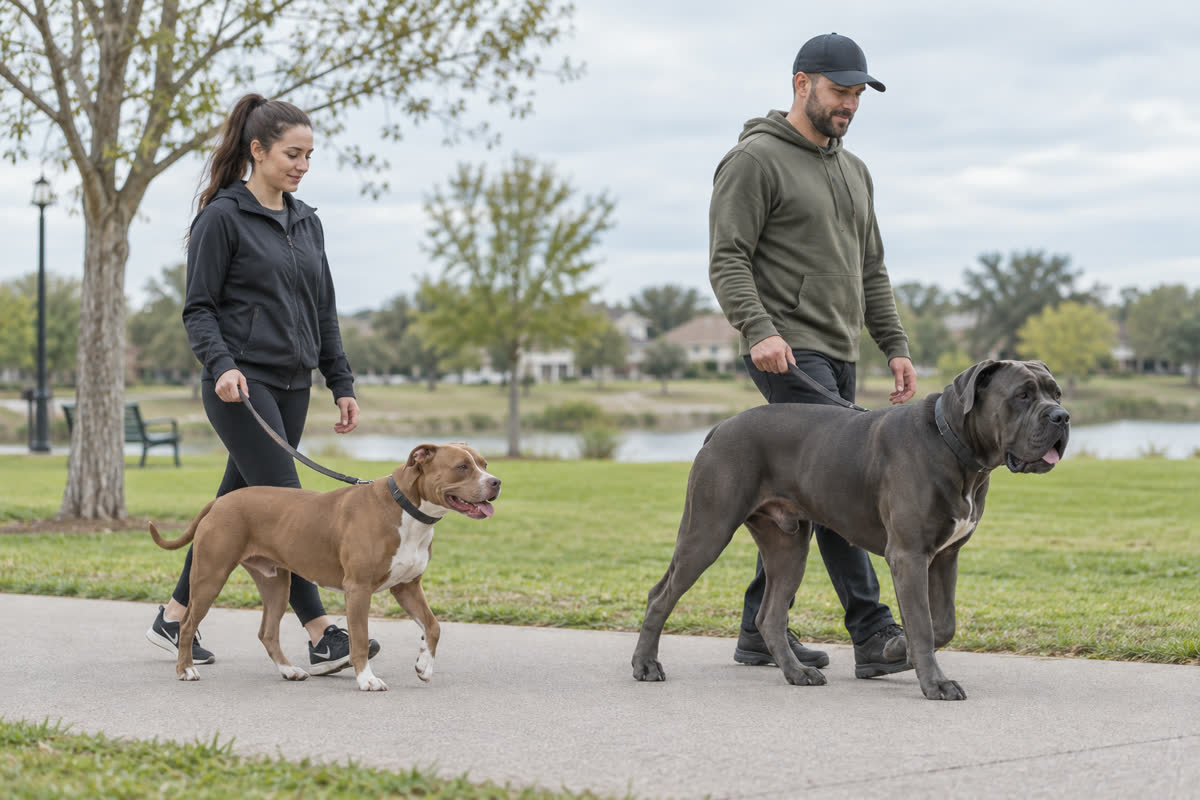
What counts as a “Pitbull” in this comparison?
“Pitbull” is not a single breed — it is a type that most often refers to the American Pit Bull Terrier, a breed the United Kennel Club (UKC) has recognized since 1898. Founder C. Z. Bennett registered his own dog, “Bennett’s Ring,” as the UKC’s first-ever registration, #1. The American Kennel Club does not recognize the American Pit Bull Terrier at all; its closest equivalent is the American Staffordshire Terrier, recognized by the AKC in 1936. Because the two share ancestry but are judged to different standards, this article uses UKC figures for the APBT and brings in AKC AmStaff figures for comparison where they differ.
The Cane Corso is not a Pitbull of any kind. It is a distinct Italian Molossus (mastiff-type) breed with its own AKC standard, unrelated to the terrier lines behind the Pitbull type. If you want the full picture of what “Pitbull” covers before you compare it to anything else, see the full list of Pitbull breeds and types. And if a muscular, blocky dog on your radar is actually an American Bully rather than a Pitbull or a Corso, every American Bully size class, from Pocket to XL, is a separate breed worth checking against before you decide.
How do the Pitbull and Cane Corso compare side by side?
The table below lines up both breeds’ core stats and traits so you can scan the differences at a glance.
| Trait | Cane Corso | American Pit Bull Terrier (AmStaff in parentheses) |
|---|---|---|
| Origin & type | Italian Molossus (mastiff-type) guardian and boar-hunting breed | American terrier-type breed developed from bulldog and terrier crosses |
| Registry | AKC (recognized 2010, Working Group) | UKC (recognized 1898); AKC does not recognize the APBT (AmStaff is AKC-recognized, 1936) |
| Height (male / female) | 25–27.5 in / 23.5–26 in | 18–21 in / 17–20 in (AmStaff: 18–19 in / 17–18 in) |
| Weight (male / female) | No number in the AKC standard — “proportionate to height.” Commonly cited around 90–110+ lb, a figure from the FCI standard, not the AKC one. | 35–60 lb / 30–50 lb (AmStaff: 55–70 lb / 40–55 lb) |
| Lifespan | 9–12 years (AKC) | Commonly cited as 12–14 years (no figure in the UKC standard); AmStaff: 12–16 years (AKC) |
| Coat & shedding | Short, stiff, dense, with a light undercoat that thickens in cold weather — moderate seasonal shedding | Glossy, smooth, close, moderately stiff — low-to-moderate shedding |
| Energy & exercise | Moderate-high; needs a job or structured work, not just a yard | High; needs real daily exercise and mental engagement |
| Guarding instinct | Strong — bred specifically as a property guardian, reserved with strangers | Low-to-moderate as a breed trait; UKC calls aggression toward humans “uncharacteristic” and undesirable |
| Dog tolerance | Early, ongoing socialization with other dogs matters for a large guardian breed | UKC standard notes most APBTs show some level of dog aggression; human aggression is not typical |
| Best for first-time owners? | Generally no — size, guarding drive and handling strength favor experienced owners | Possible with commitment to training, exercise and management around other dogs |
| Key health screens | Hips, elbows (OFA), eyes (entropion, ectropion, cherry eye), bloat risk awareness | Hips, skin allergy history; AmStaff lines: ask about NCL-A (cerebellar ataxia) DNA testing |
| UK legal status | Not banned | Pit Bull Terrier type is banned in England and Wales (gov.uk, checked September 2026) |
How much bigger and stronger is a Cane Corso?
A Cane Corso is substantially larger than a Pitbull. Under the AKC standard, male Corsos stand 25–27.5 inches at the shoulder and females 23.5–26 inches, with no weight figure given — the standard simply calls for weight “proportionate to height.” Breeders and blogs commonly cite 90–110+ pounds for males, but that number comes from the FCI standard used in Europe, not the AKC one. Treat it as a general reference rather than an official figure. The American Pit Bull Terrier, by contrast, stands 18–21 inches (males) and weighs 35–60 pounds under the UKC standard — roughly half the mass of a Corso.
That size gap changes what you’re physically managing on a leash. A Corso pulling at full weight and momentum is a different handling problem than a 50-pound APBT, even though the Pitbull is a famously strong, athletic dog for its size. You may see “bite force” figures like “700 PSI” attached to Cane Corsos online — these numbers circulate widely but trace back to no peer-reviewed measurement. Treat them as unverified popular claims rather than facts to plan around. What matters in practice is leash control, secure fencing, and a handler capable of managing the dog’s full size and drive.
How do their temperaments differ?
The Cane Corso and the Pitbull were bred for different jobs, and their temperaments reflect it. The AKC standard describes the Corso’s ability “as a protector of his property and owners” as “unequaled.” It also calls the breed “Intelligent, he is easily trained… docile and affectionate to his owner, loving with children and family.” It is a dog that watches, assesses, and defends — not a dog that greets every stranger like a friend. The APBT runs in the opposite direction with people. The UKC standard describes it as “eager to please and brimming over with enthusiasm,” adding that APBTs “make excellent family companions and have always been noted for their love of children.” It also cautions that “most APBTs exhibit some level of dog aggression,” and that aggression toward humans is “uncharacteristic of the breed and highly undesirable.”
Around children
Both standards specifically praise affection with family and children, but the practical difference is supervision style. A well-bred, well-socialized APBT tends to actively seek out play and affection with kids. A Corso is more likely to be calmly watchful — affectionate with its own family but naturally reserved rather than outgoing. Some households read this as more “serious” around visiting children until the dog knows them.
Around strangers and other dogs
This is where the two breeds diverge most. The Corso’s guarding instinct means it is naturally wary of unfamiliar people on its property, by design. The APBT’s risk profile runs the other way: it is typically confident and friendly with unfamiliar people. But the UKC standard is explicit that dog-selectivity is common in the breed, so introductions to other dogs need to be managed carefully throughout the dog’s life, not just as a puppy.
Which breed is easier to train and handle?
The APBT is easier to train and handle for most owners because it is smaller and people-oriented, while the Cane Corso’s size and guarding drive make training mistakes costlier. Both breeds are intelligent and trainable with consistent, reward-based methods — neither is “untrainable,” despite the stigma around either breed. A Corso’s guarding drive means socialization has to start early and continue deliberately, because an under-socialized adult Corso pairs size with suspicion of strangers in a way that is hard to retrofit later. An APBT’s main handling challenge is usually its dog-selectivity and raw athletic drive rather than aggression toward people, so training tends to focus on recall, impulse control, and calm introductions to other dogs.

For a first-time dog owner, the APBT is generally the more forgiving of the two if you commit to real training and exercise. That’s simply because its size and strength are more manageable, and its default orientation toward people is friendly. A Cane Corso is better suited to someone who has handled a large, strong, guardian-type breed before, or who is prepared to invest heavily in professional training support from puppyhood.
How much exercise and grooming does each need?
Both breeds need daily physical and mental work. A bored dog of either breed — especially given the APBT’s terrier drive or the Corso’s working heritage — tends to find its own outlet, and you won’t like it. The Corso does well with structured activity: long walks, obedience or protection-sport work, and a job to focus on, rather than pure high-intensity exercise. The APBT is a genuine athlete and typically needs more sustained aerobic activity — running, weight-pulling, agility, or vigorous play — on top of training time.
Grooming is easy on both. The Corso’s short, dense coat has a light undercoat that thickens in cold weather, so expect a heavier seasonal shed with light year-round shedding otherwise. The APBT’s coat is glossy, smooth and close, needing only an occasional brush.
What health problems should you screen for?
This section is educational, not veterinary advice — work with a licensed veterinarian for diagnosis, screening and treatment decisions, and if you ever suspect bloat (a distended abdomen, unproductive retching, restlessness) in a large-breed dog, treat it as a veterinary emergency and go immediately.
Cane Corso
The Cane Corso Association of America lists hip dysplasia, idiopathic epilepsy, demodex mange, and a cluster of eyelid abnormalities — entropion, ectropion, cherry eye, and distichiasis — among the breed’s known health concerns. Epilepsy onset in the breed “usually… around the age of 2 years old, though may be seen as young as 9 months, and as late as 5 years old.” There is no genetic test to screen for it. As a large, deep-chested breed, the Corso also carries a real risk of gastric torsion (bloat), which the CCAA describes as a serious, life-threatening condition. Ask a breeder for OFA hip and elbow clearances before committing to a puppy.
Pitbull (APBT / AmStaff)
Reliable breed-specific health data on the APBT is thinner than for AKC-recognized breeds, so keep expectations general: hip dysplasia and skin allergies are commonly reported concerns. In American Staffordshire Terrier lines specifically, some dogs carry a hereditary cerebellar ataxia (NCL-A), for which a DNA test exists. Ask any AmStaff or Pitbull-type breeder for test results rather than relying on claims about prevalence or age of onset, since sources disagree and no verified figures were confirmed for this guide.
Is either breed banned or restricted where you live?
The Pit Bull Terrier type is banned in England and Wales, and the Cane Corso is not; in the United States, rules vary by city, county, HOA, and individual landlord. In England and Wales, the Pit Bull Terrier type is one of five banned types, alongside the Japanese Tosa, Dogo Argentino, Fila Brasileiro, and XL Bully (last checked September 2026). Whether a dog counts as banned “depends on what it looks like, rather than its breed or name.” Homeowner’s insurance policies in the US frequently exclude or surcharge specific breeds too. Check your local ordinance, lease, and insurer directly before bringing either dog home, since coverage and restrictions differ by provider and jurisdiction.
The American Veterinary Medical Association opposes breed-specific legislation outright, concluding it is an ineffective approach to reducing dog bites. It also notes that visual breed identification is unreliable, with dogs frequently misclassified as “pit bulls” by appearance alone. That doesn’t erase the legal and insurance exposure real Pitbull owners face — it just means the exposure is about policy and paperwork as much as about the dog in front of you.
Which breed fits your home?
Use this as a quick gut-check, not a final answer — meet adult dogs of both breeds before deciding.
- First dog ever: APBT is generally more forgiving; a Corso asks for prior large-breed or guardian-breed experience.
- Young kids in the house: both can do well with supervision and early socialization; the APBT’s outgoing nature suits busy family chaos, while the Corso needs calm, consistent introductions to every regular visitor.
- Apartment living: the APBT’s smaller size is the easier fit; a Corso needs more space and a household ready for a very large dog indoors.
- Other dogs at home or on walks: plan carefully either way — the APBT’s dog-selectivity and the Corso’s territorial instinct both call for structured introductions and lifelong management.
- Want a dedicated guardian: the Cane Corso was bred specifically for this; the APBT is not a natural protection breed by temperament.
- Renting or insurance-restricted: check your policy and lease for both breeds by name, since restrictions vary by insurer and landlord.
If you’re drawn to traits from both, the Cane Corso Pitbull mix guide explains what that specific cross is like to live with day to day.
Frequently Asked Questions
Who would win in a fight between a Pitbull and a Cane Corso?
This guide doesn’t answer that question, and neither should you go looking for it. Dogfighting is illegal, and framing either breed around combat ignores the actual decision in front of you: which dog fits your home, experience level, and local laws. Both breeds deserve owners who see them as companions, not competitors.
Can a Pitbull and a Cane Corso live together?
Yes, with careful, gradual introductions and ongoing supervision, dogs of both breeds can and do live together successfully. Given the APBT’s tendency toward dog-selectivity and the Corso’s territorial streak, a slow, structured introduction — ideally with a trainer’s guidance — matters more here than with two more dog-social breeds.
Conclusion
The Cane Corso and the Pitbull solve different problems: one is a large, watchful guardian bred to size up strangers, the other a medium, people-loving athlete bred for enthusiasm and drive. Neither is the “more dangerous” breed by default — both demand a committed, experienced-enough owner, consistent training, and a household that matches their real needs rather than their reputation. Before you decide, meet adult dogs of both breeds in person, ask breeders or rescues for health screening results, and confirm what your city, lease, and insurer actually allow. That groundwork will tell you more than any comparison table ever could.