
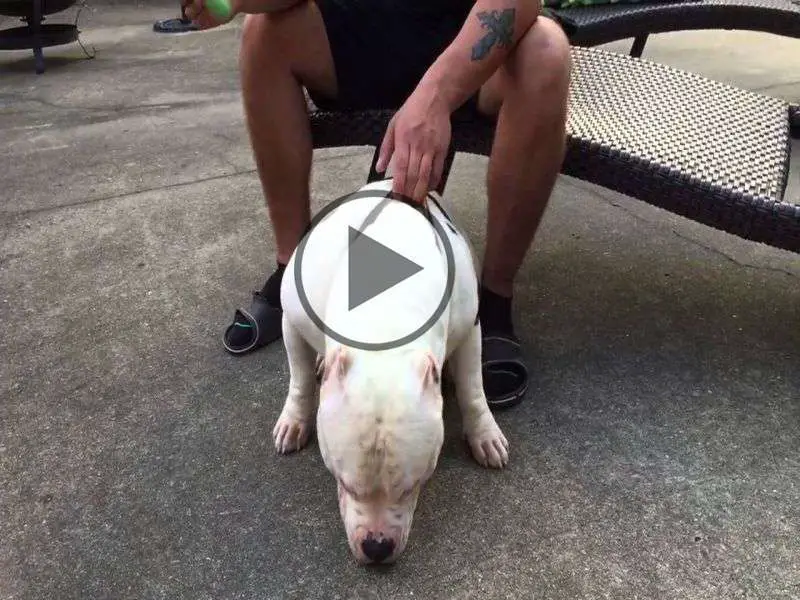
An American Bully overheats faster than most dogs his owner has met, and by the time the gums go from bright red to pale, the emergency is already underway. Summer temperatures above 90°F turn an ordinary afternoon walk into a real risk. This breed carries heavy muscle, a broad chest, and — in several size variants — a shortened muzzle, all working against him. Keeping a Bully cool isn’t one trick like a kiddie pool. It’s knowing the temperature thresholds, reading the warning signs early, and having a plan before the dog ever steps outside.
Why American Bullies Struggle With Summer Heat More Than Other Breeds
The American Bully cools almost entirely by panting — dogs have no functional whole-body sweat glands, only minor paw-pad sweating to back it up. That single cooling mechanism is working against a body type stacked with disadvantages. It carries above-average bodyweight for its height, dense muscle mass that generates more metabolic heat, and a muzzle that’s shortened relative to skull length in several size variants. Pocket, Standard, Classic, XL, and especially Exotic Bullies sit closer to the brachycephalic end of the spectrum than a Labrador or a Greyhound.
The clearest data on this comes from a 2020 Scientific Reports study by Hall, Carter and O’Neill, which tracked heat-related illness across 905,543 UK dogs. The Bulldog carried 13.95 times the odds of heat-related illness compared to a Labrador Retriever; the French Bulldog carried 6.49 times the odds. Brachycephalic skull shape alone — independent of breed label — raised the odds 2.10 times over a mesocephalic dog. Bodyweight above the breed’s mean was its own separate risk factor. The American Bully wasn’t named in that study, and it isn’t a fully brachycephalic breed. But it descends from and shares structural traits with the American Pit Bull Terrier line — heavy build, above-average bodyweight, shortened muzzle in some variants. That’s exactly the combination the study flagged as elevated risk. Treat that as a reasonable inference from adjacent breed data, not as a claim that Bullies were directly studied.
Across all heat-related illness cases in that study, the case fatality rate was 14.18% — roughly one dog in seven that develops heatstroke does not survive it. That number is the reason the rest of this article exists.
How Hot Is Too Hot? A Quick-Check Table Before You Head Outside
Air temperature alone doesn’t tell the full story — humidity matters just as much, because high humidity stops evaporative cooling from working even when the air temperature looks manageable. A humid 80°F afternoon can be more dangerous to a Bully than a dry 88°F one. Check this table before any walk or yard session in summer:
| Air Temp | Asphalt Temp | Risk to an American Bully | What to Do |
|---|---|---|---|
| Below 70°F (21°C) | Safe | Low | Normal walks and play |
| 70–77°F (21–25°C) | Up to ~125°F (52°C) | Moderate — pavement already burns | Run the seven-second hand test; stick to grass and shade |
| 78–87°F (26–31°C) | Up to ~143°F (62°C) | High | Walk before 10 a.m. or after 7 p.m. only; grass only; carry water; keep it short |
| Above 87°F (31°C) | Above 143°F (62°C) | Severe | Skip the walk. Indoor enrichment, air conditioning, kiddie pool instead |
Warning Signs of Heatstroke in an American Bully
A healthy dog’s normal body temperature runs 100.5–102.5°F (38.1–39.2°C). Heatstroke sets in at 105°F (40.6°C) or higher, according to Cornell’s Riney Canine Health Center, and organ damage becomes a risk above 106°F (41.1°C). It isn’t only about how high the temperature climbs — how long the dog stays there matters too. A Bully sitting at 105°F for twenty minutes is in worse shape than one that briefly touched 105°F and got cooled fast.
The single most teachable sign is gum color. Watch how it progresses:
- Early signs: heavy or non-stopping panting, rapid breathing, thick drooling, bright red gums and tongue, skin hot to the touch, elevated heart rate, dry mucous membranes, sudden restlessness, unsteadiness or loss of balance.
- Severe signs — emergency: gums turning pale, grey or bluish, vomiting (sometimes with blood), bloody diarrhea, muscle tremors, dilated pupils, confusion or disorientation, refusal to move, loss of bladder or bowel control, seizures, collapse, coma.
Bright red gums mean the body is fighting to cool itself. Pale, grey, or blue gums mean it’s losing.
What To Do If Your Bully Is Overheating
Heatstroke is a medical emergency. If your Bully shows collapse, extreme lethargy, vomiting, bloody diarrhea, seizures, or gums that are bright red, pale, grey or blue, start cooling immediately. Get to a veterinarian or emergency clinic right away. Dogs that appear to recover can still suffer organ damage hours later, so a vet check is not optional. This article is general information, not veterinary advice — talk to your own vet if your dog has existing airway, heart, or weight issues.
- Move the dog out of the heat into shade or air conditioning immediately.
- Wet the dog with tepid or cool water, focusing on the underside, belly, armpits and groin — never ice water.
- Add airflow. A fan, or the car’s A/C vents on the way to the vet. Evaporation is what actually cools the dog.
- Offer room-temperature water only if the dog is standing and alert. If the dog is down, disoriented, or seizing, skip this step and go straight to the car.
- Never use ice, ice water, or ice-water immersion. According to the American Kennel Club, extremely cold water can cause shock and constricts surface blood vessels, which traps heat in the core instead of releasing it. Skip wet towels too — they trap heat the same way.
- Go to a vet even if the dog seems to recover. Delayed complications like acute kidney injury, disseminated intravascular coagulation (DIC), and GI bleeding can show up hours later.
The line that matters: any collapse, seizure, bloody vomit or diarrhea, or gums that are pale, grey, or blue means emergency vet care right now. Cool the dog in the car on the way.
Hot Pavement and Paw-Pad Burns
Asphalt gets far hotter than the air above it. At 77°F (25°C) air temperature, asphalt reaches roughly 125°F (52°C) — hot enough to destroy skin in about 60 seconds. At 87°F (31°C) air, asphalt climbs to around 143°F (62°C). Artificial grass is worse than either: it’s the hottest common walking surface tested, topping 122°F (50°C) by mid-afternoon, hotter than asphalt, concrete, or brick. Natural grass stays the coolest option by a wide margin.
The field test is simple. The Royal Kennel Club recommends pressing the back of your hand flat on the surface for seven seconds. If you can’t hold it there comfortably, it’s too hot for paws. Watch for limping, refusing to walk, whimpering, or licking and chewing at the feet; pads that look red, swollen, blistered, raw, peeling, or darker than normal need a vet’s attention. Walk during the safe windows: before 10 a.m. or after 7 p.m., when both the air and the pavement have had time to cool. A well-fitted harness built for a pitbull-type build makes those early or late sessions easier to manage on a dog with this much pulling power.
Cooling Methods That Actually Work
A kiddie pool filled with cool water, set up somewhere shaded, gives a Bully a place to self-regulate through the afternoon. Most dogs will wade in and out on their own once they learn it’s there. Pair it with cooling mats, vests, and other American Bully accessories for dogs that spend real time outdoors on warm days. A soaked cooling mat in a shaded spot gives the dog somewhere to lie down that’s actively pulling heat away rather than just out of direct sun.
This video runs through practical summer cooling tips for Bully-type dogs, including pool setup and shade positioning:
Indoors, air conditioning does more for a heat-sensitive breed than any single gadget. If the temperature climbs above 87°F, that’s the day to skip the walk entirely and lean on indoor enrichment instead.
Coat Color, Grooming, and Sunscreen — Get This Right
Coat color plays both sides of this. A dark or thick coat absorbs more radiant heat, which is part of why dark-coated and thick-coated dogs are listed among the higher-risk groups above. A white or light-coated Bully absorbs less heat through the coat — but that’s only half the picture. Light coats usually sit over thinly pigmented, pink skin, which sunburns far more easily and carries a real risk of squamous cell carcinoma over time. A white Bully trades one risk for another; coat color is not a substitute for shade, water, or timing outdoor time correctly.
Regular brushing to remove dead undercoat supports airflow across the skin and is genuinely useful maintenance on a shedding Bully. It’s a marginal aid, though, not a cooling method on its own. Pair it with the right dog shampoo for pitbulls and Bullies to keep the coat clean without stripping it. Never shave a Bully’s coat for summer. The short, single, close coat reflects radiant heat and shields the skin from UV exposure, so shaving it off removes protection rather than adding cooling.
If you use sunscreen, it needs to be dog-formulated. It also needs to go on the highest-risk spots — nose bridge, lip margins, ear tips, and belly — not skipped there. According to the ASPCA, look for products free of zinc oxide, PABA, and salicylates. Repeated skin exposure to zinc oxide can cause zinc toxicity and damage red blood cells, while salicylates irritate skin and cause problems if licked and ingested. Pet sunscreens aren’t FDA-tested for efficacy, so the ASPCA’s primary recommendation is shade and limiting peak-afternoon exposure, with a vet-approved sunscreen as a secondary measure — not the main defense.
Hydration: How Much Water Does an American Bully Need
A commonly cited baseline is about 1 ounce of water per pound of bodyweight per day at rest. Treat that as a starting point, since heat and exercise both push the requirement higher. Set out multiple bowls, refill through the day, and drop in ice cubes to keep water appealing in the heat. Don’t withhold water after exercise; offer small amounts frequently instead of one large volume. Watch for dehydration signs: tacky or dry gums, thick ropey saliva, sunken eyes, lethargy, and reduced skin elasticity. Pinch the scruff gently and it should snap back instantly; if it stays tented, the dog needs fluids and, if signs are severe, a vet. Some owners also look at general wellness support alongside hydration, including supplements formulated for American Bullies, though nothing replaces water access on a hot day.
Never Leave a Bully in a Parked Car
Car interiors climb to dangerous temperatures within minutes, even with the windows cracked and the car parked in shade — shade does not prevent the buildup. Never leave an American Bully in a parked car during warm weather, not even for a “quick five minutes.” This is one of the most preventable causes of heatstroke, and it has no exceptions.
Puppies, Seniors, and Higher-Risk Bullies
Puppies and senior dogs regulate body temperature less efficiently than a healthy adult. Overweight Bullies carry extra insulation that traps heat. Per the VetCompass data above, bodyweight above the breed average is also an independent risk factor, separate from skull shape. Dark-coated dogs absorb more heat through the coat. If your dog falls into more than one of these groups, shorten outdoor time further than the table above suggests and watch more closely for early warning signs. Bully-type breeds share enough heat sensitivity with other short-muzzled, heavily built dogs that it’s worth reading seasonal care tips for English Bulldogs as a companion reference. Much of that guidance transfers directly.
Frequently Asked Questions
Should I shave my American Bully in summer?
No. The coat reflects radiant heat and protects the skin from UV exposure. Shaving removes that protection and increases sunburn risk without meaningfully improving cooling.
Can I put sunscreen on my dog?
Yes, but only a dog-formulated product free of zinc oxide, PABA, and salicylates, applied to the nose, ears, lips, and belly. Shade and limiting midday exposure still matter more than sunscreen.
Can American Bullies swim?
Many can and enjoy it, but the breed’s dense muscle mass and broad chest make them less naturally buoyant than a leaner breed. Always supervise a Bully around water, use a life vest in open water, and let the dog build confidence gradually in shallow water first.
Do cooling vests and mats actually work?
Evaporative cooling vests and gel-filled cooling mats do provide real relief when kept damp or refrigerated as directed. They’re a useful supplement to shade and water, not a replacement for either.
Can a dog recover from heatstroke?
Yes, especially with fast cooling and prompt veterinary care, but recovery isn’t guaranteed. The case fatality rate across documented heat-related illness cases is about 14%, and organ damage can surface hours after the dog appears stable. That’s why a vet check is never optional, even once the dog seems fine.
Conclusion
An American Bully carries heavy muscle, above-average bodyweight, and in several size variants a shortened muzzle. That build puts him at genuinely higher risk in summer heat than a leaner, longer-muzzled breed, and the data backs that up now, rather than just the anecdotes. Check the temperature and pavement before you head out, and know the early warning signs before they turn severe. Keep the six-step cooling response in mind so you’re not looking it up mid-emergency. When in doubt, skip the walk, run the air conditioning, and let the kiddie pool do the work instead.