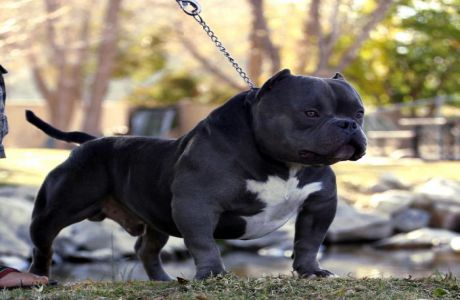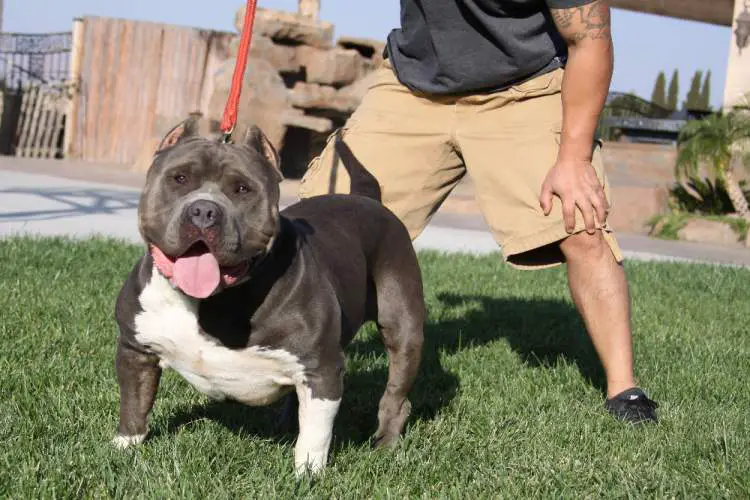
The Classic Bully carries the same height at the withers as the American Bully Standard. It just wears noticeably less bone and less overall mass — the difference lives in build, not size. If you’ve stood a Classic and a Standard side by side and couldn’t quite name what looked different, that’s usually it. A leaner, less substantial dog stands at exactly the same height as its Standard littermate.
What Is a Classic American Bully?
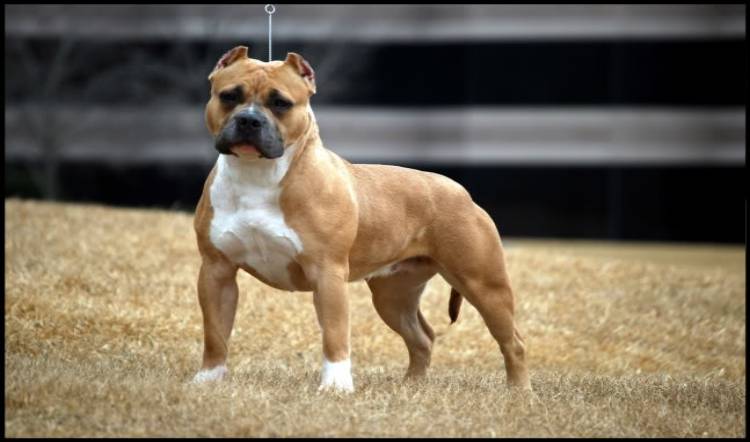
The American Bully breed is split into four officially recognized classes, and the Classic is one of them — not a separate breed, not an “amended” version of anything. The American Bully Kennel Club defines it plainly. A Classic is simply an American Bully with a lighter body frame (lighter bone) and less overall body mass (less substance) than the Standard. The head is still blocky with a short, square muzzle; the body is still muscular and compact. It just carries that structure on a lighter chassis.
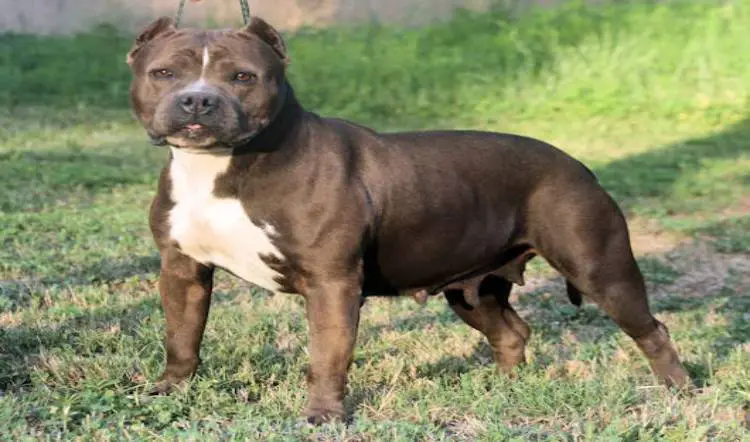
There is a common misconception worth clearing up: the American Bully as a whole was built up from the American Pit Bull Terrier and American Staffordshire Terrier to carry more bone and substance than those foundation breeds. The Classic is the variety that keeps the most of that older, leaner terrier outline while still meeting the Bully standard. It isn’t the “biggest boned” variant — it’s the one that stays closest to where the breed started.
Classic vs. Standard, Pocket, and XL: The Four ABKC Classes
Four classes, one breed standard, and the split is decided by two things only: height at the withers and build. Here’s how the ABKC lays it out:
| Class | Male height (withers) | Female height (withers) | Bone / frame | Defining difference vs. Standard |
|---|---|---|---|---|
| 14 – under 17 in | 13 – under 16 in | Compact, moderate bone | Shorter overall | |
| Standard | 17 – 20 in | 16 – 19 in | Heavy bone, dense muscle | The baseline |
| Classic | 17 – 20 in | 16 – 19 in | Lighter bone, less mass | Same height as Standard, lighter build |
| XL | over 20 – 23 in | over 19 – 22 in | Heavy bone, dense muscle | Taller overall |
The line worth remembering: Classic and Standard share the exact same height range at the withers. Classic isn’t a size class the way Pocket and XL are — it’s a build class. You’ll also see “Micro Bully” mentioned online; it isn’t an ABKC-recognized class, just an informal breeder term for dogs bred smaller than the Pocket range.
Which Class Is My Bully? A 3-Step Way to Tell
Weight is not how a Bully’s class gets decided — height and frame are. Here’s the actual process:
- Measure at the withers — the highest point of the shoulder blades, not the top of the head — with the dog standing square on a level surface.
- Read the height against the table above. Under 17 in (male) or 16 in (female) puts the dog in Pocket range. Over 20 in (male) or 19 in (female) puts it in XL. Anything in between is either Standard or Classic.
- If the height lands in the Standard range, the split comes down to bone and mass, not a tape measure. A lighter frame with less substance is Classic; heavier bone and a bulkier, more massive build is Standard. Weight alone never decides it.
Is the Classic Still a “Real” American Bully?
Yes — the Classic is judged to the same breed standard as the other three classes and shows in ABKC conformation rings like any other American Bully. The debate mostly comes from newer fans who equate “Bully” with maximum bone and mass, and assume a lighter-framed dog must be something less. It isn’t; it’s one of four recognized ways the same breed standard gets expressed. If anything, the Classic’s closer resemblance to the Pit Bull Terrier outline it descended from makes it the variety with the strongest claim to the breed’s original look.
Where the Classic Bully Came From
The American Bully as a breed was developed in the United States starting in the 1980s, with its form largely settled by the 1990s. The American Pit Bull Terrier is the foundation breed. Breeders also worked in the American Bulldog, English Bulldog, and Olde English Bulldogge to build the breed’s compact, muscular look, per Wikipedia’s American Bully breed history. The ABKC recognized the American Bully as its own breed in 2004, and the United Kennel Club followed with recognition on July 15, 2013. The Classic has been part of that recognized structure from early on, not a later add-on.
Temperament: What to Expect Day to Day
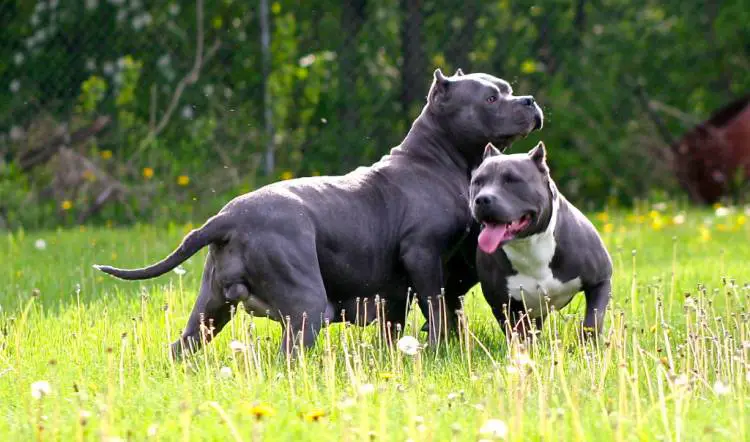
A Classic Bully that’s bred and raised to standard is gentle by design, not by exception. The ABKC standard specifically calls for a dog that is great with kids and extremely friendly with strangers, other dogs, and other animals, despite a powerful physical presence. In practice that shows up as a dog that leans into visitors rather than backing off and settles fast after the initial greeting-excitement. It treats new people as an opportunity rather than a threat — the opposite of what the blocky head and heavy shoulders suggest at first glance.
Here’s the correction worth making plainly: human-directed aggression is not an acceptable “defensive” trait in this breed — it’s a disqualifying fault under the ABKC breed standard. Alertness and watchfulness around the home are normal. A dog that growls, snaps, or bites at a person is showing a serious deviation from what the breed is supposed to be, not doing its job. Breeders and owners who frame human aggression as “just protective instinct” are working from the wrong standard.
Health Issues to Watch For
The Classic’s lighter frame doesn’t exempt it from the health concerns that show up across the American Bully breed. The main ones to ask a breeder about: hip dysplasia, elbow dysplasia, and brachycephalic airway issues, where the risk rises as the muzzle gets shorter and more compressed. Also watch for skin conditions including allergies and congenital ichthyosis, eye conditions such as entropion, cherry eye, and progressive retinal atrophy, and heart disease. Typical lifespan across the breed is 10 to 13 years.
Hip and elbow dysplasia are a recognized concern in heavily muscled breeds generally. A peer-reviewed study on canine hip dysplasia demographics notes that screening-registry data comes from dogs voluntarily submitted for testing, which skews the numbers higher than the true population rate. The practical takeaway matters more than any single statistic: ask the breeder for OFA or PennHIP screening results on both parents before you commit to a puppy.
How Much Does a Classic Bully Cost?
A Classic Bully puppy from a reputable breeder typically runs $1,000 to $5,000 in the US, with dogs from elite, proven bloodlines going well past $10,000. The range swings on pedigree, health testing done on the parents, and how established the bloodline is — not on the puppy’s color or how “extreme” it looks. If price is a major factor in your decision, it’s worth reading up on how to evaluate an American Bully bloodline before you start contacting breeders. That way you know what you’re actually paying for.
Exercise, Grooming, and Feeding
Where owners underestimate the breed is exercise — despite the compact build, a Classic Bully needs a genuine daily outlet, not just a backyard let-out. Twenty to forty minutes of real activity a day (a brisk walk plus some structured play) keeps the muscle tone the breed is meant to carry. It also heads off the boredom-driven destructiveness that shows up in under-exercised Bullies.
Grooming stays simple: the Classic’s short coat needs a weekly brush and only occasional bathing. Nutrition needs mirror the Standard’s. A diet built around real protein content supports the muscle mass, sized to the dog’s actual activity level rather than a generic bag-label guideline. Our guide to the best dog food for Pitbulls covers the protein and fat targets in more detail. Early, consistent socialization and basic obedience work make a real difference in a breed this physically capable. See our American Bully training basics for where to start.
Comparing the Classic against the Standard American Bully? Our guide to the different types of American Bully lays out all four — Pocket, Standard, Classic, and XL — side by side.
Frequently Asked Questions
Is a Classic Bully the same height as a Standard Bully?
Yes. Both classes share the same ABKC height range at the withers — 17 to 20 inches for males, 16 to 19 inches for females. The difference is bone and body mass, not height.
Do Classic Bullies weigh less than Standard Bullies?
Typically, yes, though the ABKC standard is height-based and doesn’t publish official weight figures. Breeders commonly report Standard and Classic dogs in the 60–85 lb range, with Classics usually sitting toward the lower end at a given height.
Is a Classic Bully a Pitbull?
Not exactly. The Classic is an American Bully, a breed developed from the American Pit Bull Terrier plus several other breeds. It’s closely related to the Pit Bull Terrier and resembles it more than the other Bully classes do, but it’s classified as its own breed.
How long do Classic Bullies live?
Typical lifespan across the American Bully breed, Classic included, is 10 to 13 years with reasonable health screening and care.
Are Classic Bullies aggressive?
No — the breed standard calls for a gentle, people-friendly temperament, and aggression toward humans is a disqualifying fault, not an accepted trait. Individual dogs can still be poorly bred or poorly socialized, which is why screening the breeder and the bloodline matters.
How much exercise does a Classic Bully need?
Around 20 to 40 minutes of real activity a day — walking plus structured play — despite the compact frame making the breed look lower-energy than it is.
Conclusion
The Classic Bully is not a lesser or “amended” American Bully. It’s one of four ABKC-recognized classes, sharing the Standard’s exact height range and full breed standard, distinguished only by a lighter frame and less body mass. Judge a prospective puppy by the bloodline, the parents’ health screening results, and adherence to the temperament standard — a gentle, people-friendly dog, never one excused for human aggression. Don’t judge it by bone mass alone. If you’re deciding between a Classic and a Standard, start with a breeder who can show you OFA or PennHIP results on both parents and go from there.