The XL Bully ban is already law in England, Wales, Scotland, Northern Ireland and the Republic of Ireland, and it controls how the dog can be imported or registered in Jersey and the Isle of Man too. There is no federal or state-level XL Bully ban anywhere in the United States. Two changes take effect in 2026 that most existing guides still don’t cover: the third-party insurance condition was dropped from 1 July 2026, and a new child-supervision rule starts 1 November 2026. Every rule below is checked against the relevant government page as of 25 September 2026.
Which Countries Ban the XL Bully Right Now?
Six jurisdictions currently restrict the XL Bully in some form, and each one sets its own dates, conditions and penalties. The table below is the fastest way to check where you stand — for background on how the XL Bully fits among the other types of American Bully and their size classes, see our hub guide.
| Jurisdiction | Status | In force since | New exemptions? | Key owner rules | Source |
|---|---|---|---|---|---|
| England & Wales | Banned without exemption | 1 Feb 2024 | Court order only | Muzzle + lead in public, neutered, microchipped, same-address rule | GOV.UK |
| Scotland | Banned without exemption | 23 Feb 2024 | Court order only | Muzzle + lead in public, secure housing, notify address/death/export | mygov.scot |
| Northern Ireland | Banned without exemption | 1 Jan 2025 | No general scheme open | Muzzle + lead, neutered, licensed, microchipped | nidirect |
| Republic of Ireland | Banned without exemption | 1 Feb 2025 | Exceptional cases only | Neutered, microchipped, valid dog license | South Dublin County Council |
| Jersey | Import/export license + registration required | 24 Feb 2024 | Registration scheme applied | Neutered before registration, muzzled, lead held by someone over 18, insured | gov.je |
| Isle of Man | Import banned; dogs already resident can stay | 23 Nov 2023 | N/A | No published muzzle/lead/neutering conditions | gov.im |
| United States | No national or state ban | — | N/A | Check local breed-specific ordinances, lease terms, and insurer policies | Local city/county code |
How Does the Law Decide a Dog Is an XL Bully?
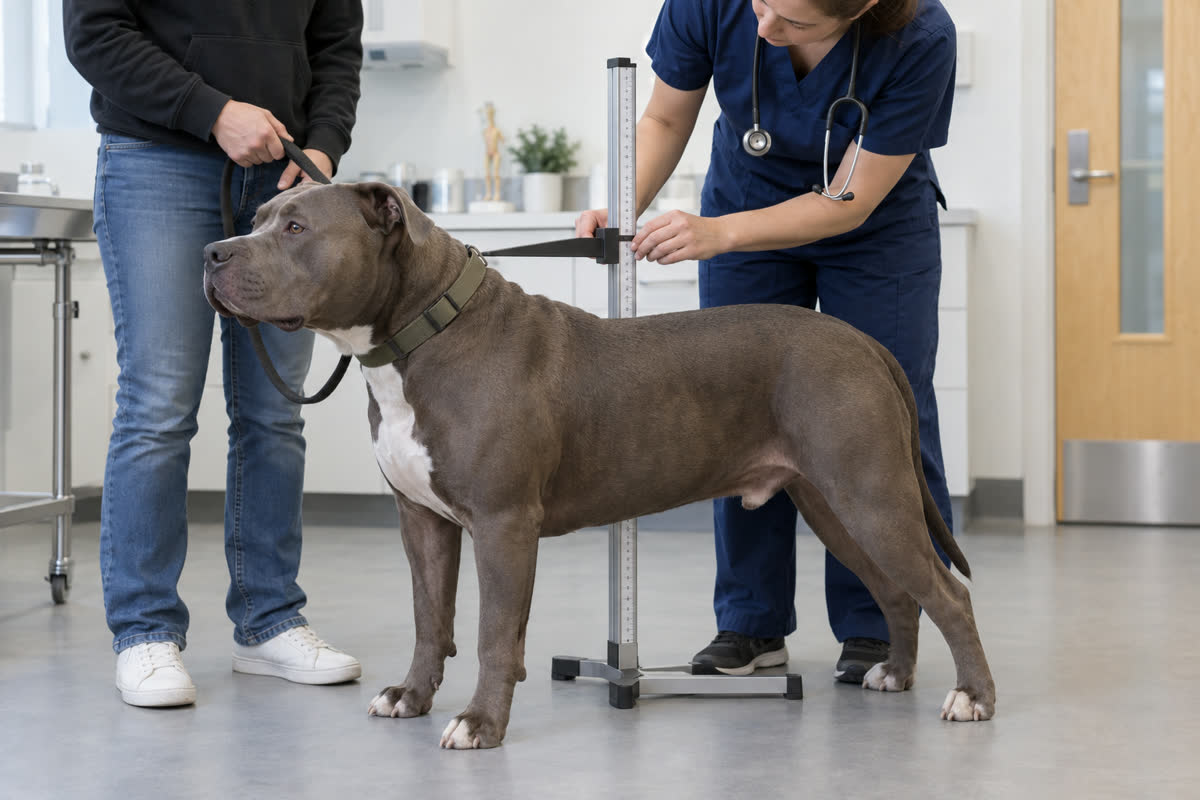
The law defines an XL Bully by physical measurement and appearance, not by registry papers or what a breeder calls the dog. In England and Wales, an adult male is in scope from 20 inches (51 cm) at the withers, and an adult female from 19 inches (48 cm). Height alone isn’t the whole test — enforcement guidance requires the dog to meet the minimum height and show a substantial number of the type’s other characteristics, such as a muscular body and a blocky head giving an impression of strength for its size. Weight isn’t part of the definition, and neither is a certificate from the ABKC or UKC — a dog can be unregistered and still meet the legal description, or registered and still fall short of it.
This catches owners who don’t think of their dog as an XL. A tall male Standard American Bully that clears 20 inches at the shoulder can meet the height threshold even if he was sold and registered as a Standard, and most dogs marketed as XXL Bullies clear the height threshold comfortably, and their heavy build usually matches the conformation traits too. If your dog is close to these numbers, treat the measurement steps below as the starting point, not the final word — only an enforcement officer or a court makes the legal determination.
How to Measure Your Dog at the Withers
The withers is the highest point of the shoulder blades, where the neck meets the back — not the top of the head or the ears.
- Stand the dog square on a flat, level surface with all four legs bearing weight evenly.
- Find the highest point of the shoulder blades by running a hand along the back to where it meets the neck.
- Measure straight up from the ground to that point, using a wicket or a spirit-level and tape measure rather than guessing by eye.
- Compare the result to 20 inches (51 cm) for an adult male or 19 inches (48 cm) for an adult female, then weigh that against the dog’s overall build and head shape. A single measurement taken on a soft surface or with the dog standing unevenly can be inaccurate.
What Must XL Bully Owners Do in England and Wales?
An owner with a valid Certificate of Exemption must meet a fixed set of conditions to keep their dog legally. As of 25 September 2026, the current exemption conditions on GOV.UK are:
- Keep the dog at the address on the certificate, with no more than 30 days a year elsewhere.
- Microchip the dog and be able to show the certificate within 5 days if asked.
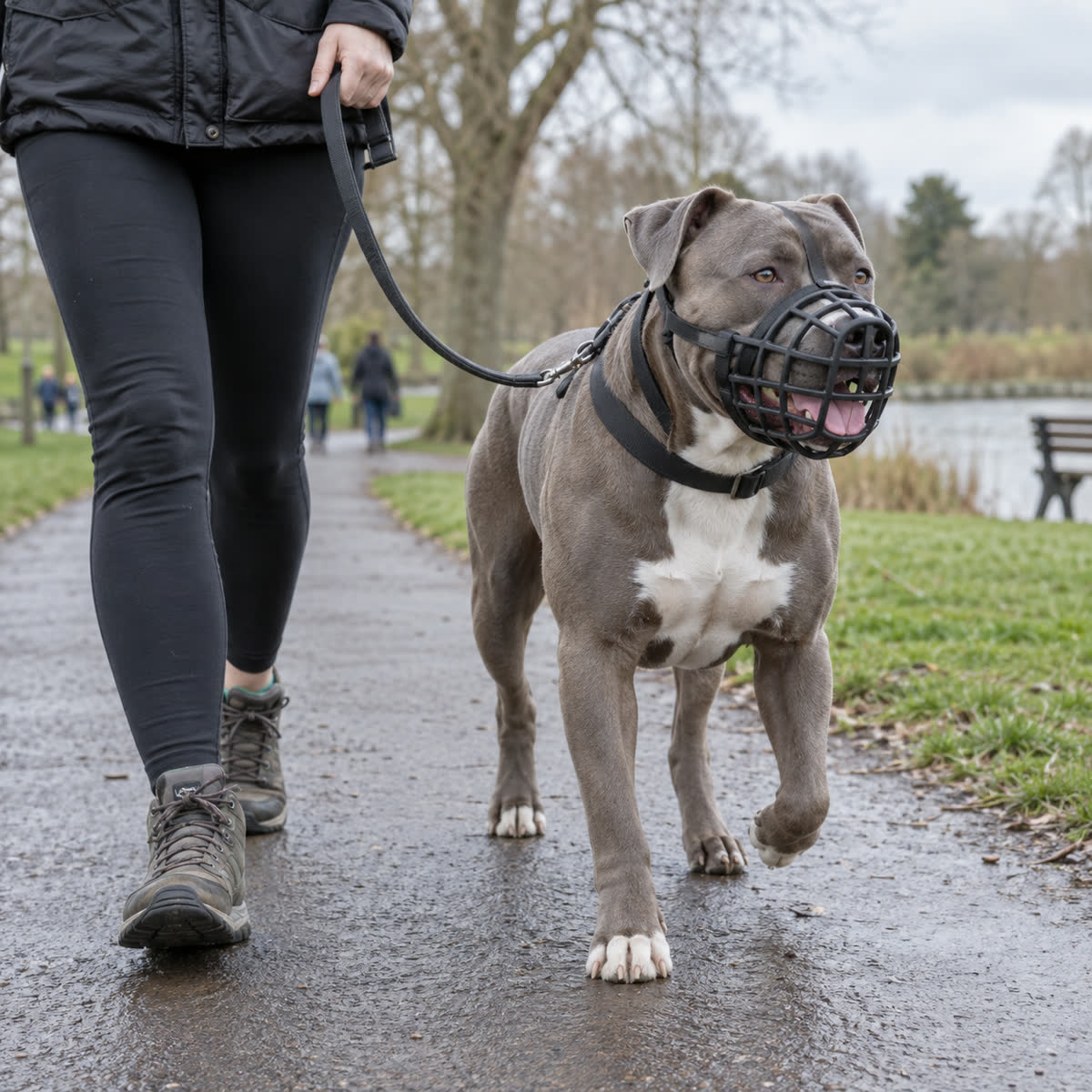
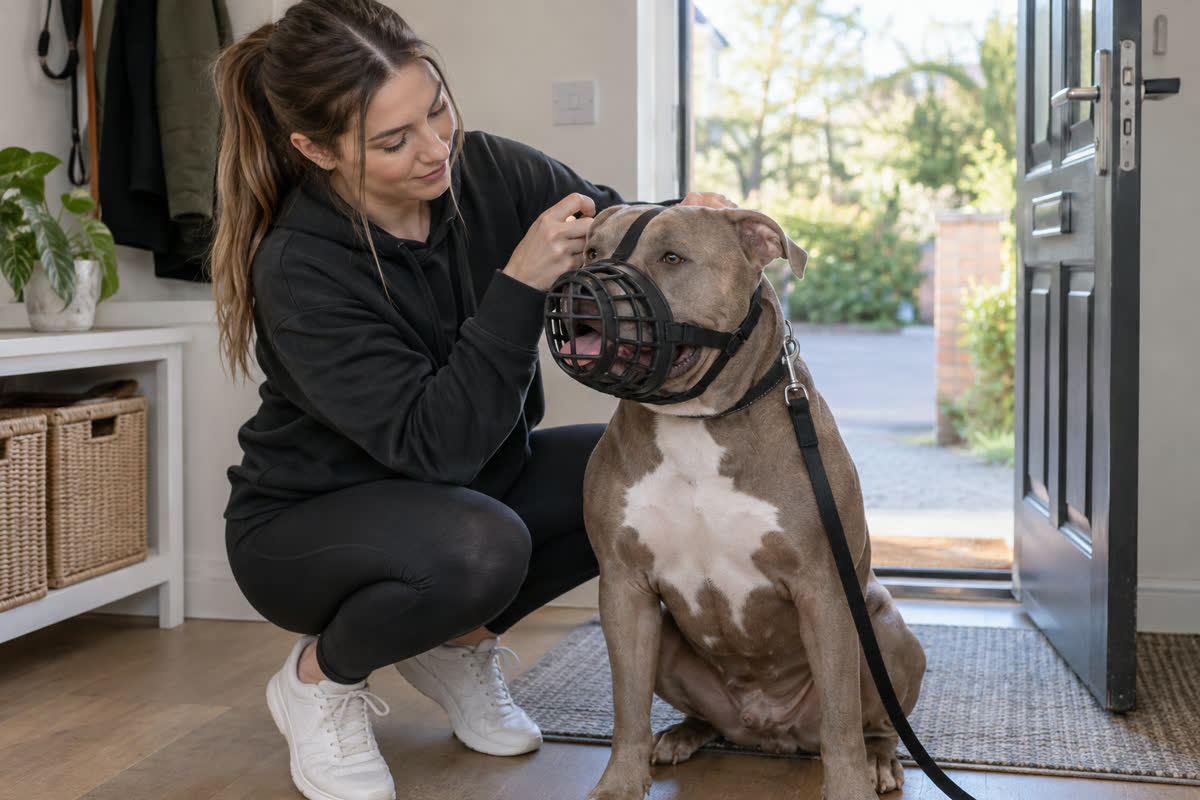
- Muzzle the dog in public (Defra recommends a muzzle that lets it pant and drink).
- Keep the dog on a lead held by someone aged 16 or over whenever it’s in public.
- Keep the dog neutered, with proof submitted by the relevant deadline for its age.
- Keep the dog secured so it cannot escape.
Third-party public liability insurance was a condition of exemption until recently, but that requirement was dropped in England and Wales from 1 July 2026. Owners should still check whether their home or pet insurer requires cover separately, since the legal condition and an insurer’s own policy terms aren’t the same thing.
The New Child-Supervision Rule (1 November 2026)
From 1 November 2026, a new condition applies in England, Wales, Scotland and Northern Ireland: owners must not leave a child under 12 in close contact with an XL Bully in a private place without adult supervision. This applies inside the home as well as in gardens and other private spaces — it isn’t limited to public areas, which is where the existing muzzle-and-lead rules apply.
What Happens If You Don’t Have an Exemption?
Exemption applications in England and Wales closed on 31 January 2024, and the ban has applied since 1 February 2024. New exemptions are no longer issued through the original scheme — the only route now is a court order. Owning, selling, abandoning, giving away or breeding an XL Bully without a valid certificate is a criminal offence.
How Do the Rules Differ in Scotland and Northern Ireland?
Scotland’s XL Bully safeguards came into force on 23 February 2024, with owner-led exemption applications closing on 1 August 2024; new exemptions now require a court order, the same as in England and Wales. Conditions mirror the England and Wales rules — muzzle and lead in public with a handler 16 or over, secure housing, and notifying the authorities of any change of address, the dog’s death, or its export. Owners face a fine of up to £5,000 or up to 6 months’ imprisonment for breaching the rules. The 1 November 2026 child-supervision rule applies in Scotland on the same date as in England and Wales.
Northern Ireland classed the XL Bully as a restricted type from 5 July 2024, ran its own exemption scheme from 9 August to 31 December 2024, and it has been illegal to own an unregistered XL Bully there since 1 January 2025. Owners need a certificate, a £12.50 dog license, neutering, and the same muzzle-and-lead requirement in public. Third-party insurance was required in Northern Ireland only up to and including 30 June 2026, dropping from 1 July 2026 in step with England and Wales. Penalties run up to £5,000 or 6 months’ imprisonment, and the child-supervision rule takes effect there from 1 November 2026 as well.
What Does the Irish XL Bully Ban Require?
The Republic of Ireland banned importing, breeding, selling and rehoming XL Bullies from 1 October 2024, and ownership without a Certificate of Exemption became illegal from 1 February 2025. The application window ran from 1 October 2024 to 31 January 2025; outside that window, exemption is granted only in exceptional cases, such as a returning resident bringing a dog back into the country. An exempted dog must be neutered, microchipped and covered by a valid dog license, and there is no fee for the certificate itself. Breaching the rules under the Control of Dogs Act 1986 can mean seizure, a fine of up to €2,500, or up to 3 months’ imprisonment.
Are XL Bullies Restricted in Jersey and the Isle of Man?
Jersey requires an import or export license for the XL Bully type — along with the Dogo Argentino, Fila Brasileiro, Japanese Tosa and Pit Bull Terrier types — since 24 February 2024, and from 2 December 2025 owners had 30 days to register any XL Bully type dog already on the island. Registration conditions are stricter than the UK’s: the dog must be neutered before registration, muzzled in public, walked on a lead held by someone over 18 (not 16), covered by annual third-party insurance, and kept securely. Once registered, an XL Bully in Jersey cannot be rehomed, sold or have ownership transferred.
The Isle of Man added the XL Bully to its restricted import list in November 2023, with the import ban taking effect on 23 November 2023. Dogs already living on the island before that date can stay, and the government’s page does not publish separate muzzle, lead or neutering conditions for resident dogs — don’t assume UK-style conditions apply there without checking directly.
Is the XL Bully Banned in the United States?
No — there is no federal or state-level XL Bully ban anywhere in the US as of this check. Restrictions that do exist are local: city and county breed-specific ordinances, typically written around “pit bull” type dogs rather than the XL Bully specifically, plus separate restrictions that landlords, HOAs and home or renters’ insurers can apply on their own terms regardless of what local law says. Because these ordinances differ from one city or county to the next and change without much notice, the only reliable way to know where you stand is to check your own city or county code directly, and to read your lease and insurance policy for breed clauses before you sign either one.
This ITV News explainer covers how the England and Wales ban was originally introduced; it was published before the 2024 enforcement date and predates the 2026 insurance and child-supervision changes above.
Frequently Asked Questions
Can I travel to or move to the UK with an XL Bully?
Only if your dog already holds a valid Certificate of Exemption for the jurisdiction you’re entering, or you obtain one through a court order — the original application windows are closed everywhere in Great Britain and Northern Ireland. Bringing an unexempted XL Bully into England, Wales, Scotland or Northern Ireland, including moving house with one from abroad, risks the dog being treated as illegally owned. Check the relevant government page before you book any travel.
Are Pocket or Standard American Bullies banned?
Not automatically — a Pocket Bully’s size keeps it well clear of the withers threshold, but a large male Standard can meet it on height alone. See the definition section above for how the full test works.
What happens if you’re caught with an unregistered XL Bully?
It’s a criminal offence in every banned jurisdiction. Penalties are set separately by each government — see the England and Wales, Scotland, Northern Ireland and Ireland sections above for the specific fines and any prison term that applies.
This article summarizes general legal information as checked against official government sources on 25 September 2026. Laws in this area change — confirm current rules with the official source for your jurisdiction before buying, moving, or traveling with a dog, and treat this as general information rather than legal advice.
Conclusion
If your XL Bully lives in England, Wales, Scotland, Northern Ireland or the Republic of Ireland, start by confirming your certificate of exemption is current and that you’re meeting the muzzle, lead and neutering conditions for your jurisdiction — then note the child-supervision rule arriving 1 November 2026. If you’re unsure whether your dog counts as an XL at all, measure at the withers using the steps above and compare the result against the official conformation standard rather than guessing from registry papers. And if you’re in the US, don’t assume federal or state law protects you — check your own city or county ordinance and your lease or insurance terms directly, since restrictions there are local and can change with little warning.