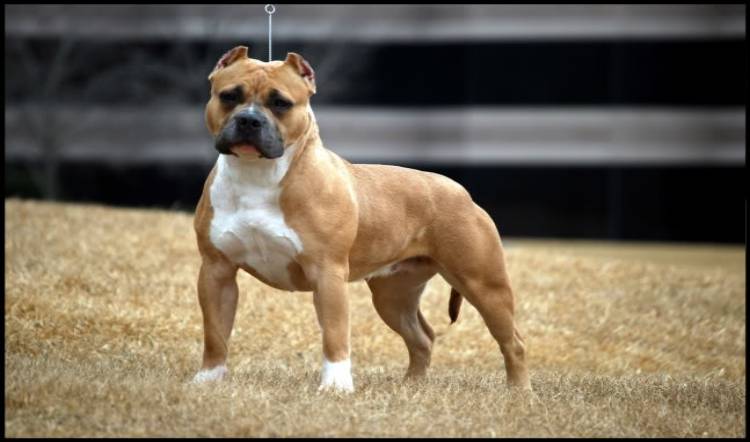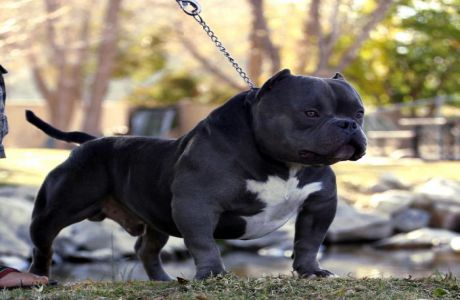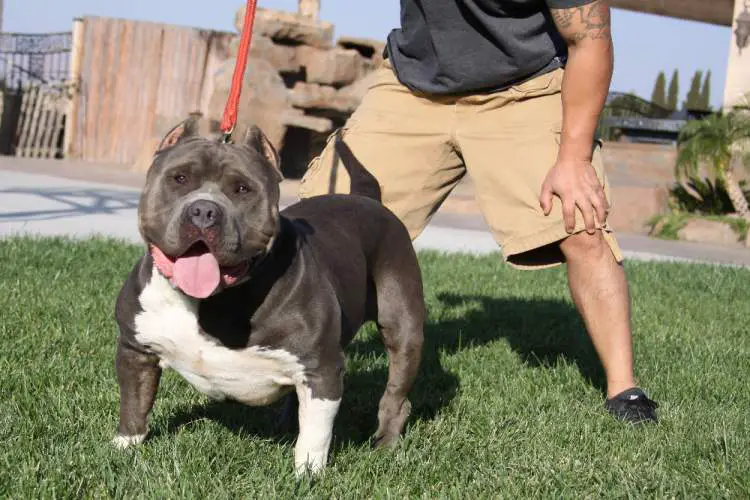
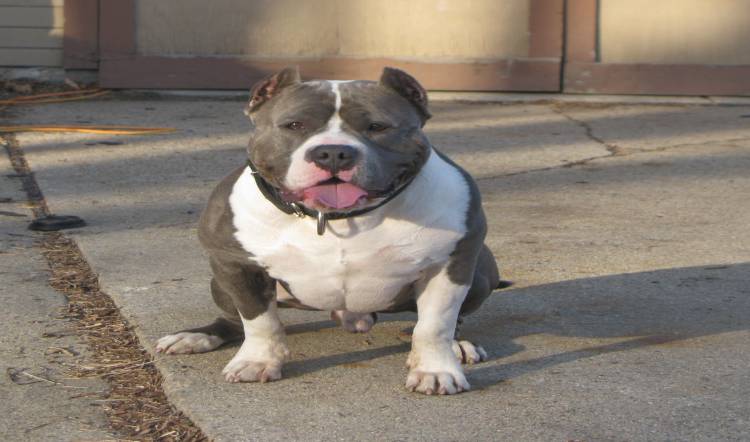

The Standard American Bully stands 17 to 20 inches at the withers for males, 16 to 19 for females, per the American Bully Kennel Club (ABKC) breed standard. That height range is what makes it the baseline size class the rest of the breed gets measured against. At first glance it reads as a stocky Bulldog, but the pedigree behind that blocky head and thick body runs back to a very different dog. Picking a Standard over a Pocket or a Classic comes down to knowing exactly what separates the classes.
Standard, Pocket, Classic, or XL: How the Size Classes Compare
A Standard American Bully is defined by height alone, and it shares its exact range with the Classic class. The two are told apart by bone and body mass, not inches. Here’s how the four main classes line up at the withers:
| Class | Male height (withers) | Female height (withers) | What sets it apart |
|---|---|---|---|
| Under 17 in (min 14 in) | Under 16 in (min 13 in) | Shortest class | |
| Standard | 17–20 in | 16–19 in | The baseline class |
| Classic | 17–20 in | 16–19 in | Same height as Standard, lighter bone and less body mass |
| XL | Over 20–23 in | Over 19–22 in | Tallest recognized class |
Some kennels also market Exotic, Micro, and XXL dogs, but none of those have a governing height standard the way Pocket, Standard, Classic, and XL do. Treat any breeder claiming an “official” Exotic or XXL standard with caution. If you’re still narrowing down which class fits your dog, work through the different types of American Bully side by side. It’s also worth weighing a Standard against the Classic Bully variant specifically, since that’s the comparison most owners actually get wrong. Owners drawn to a bigger dog often end up cross-shopping the larger XXL Bully instead, which is a different commitment in size and upkeep.
Where the Standard American Bully Actually Comes From
The Standard American Bully’s foundation breed is the American Pit Bull Terrier, according to the United Kennel Club (UKC). The Bulldog-like head and heavier bone came later, from American Bulldog, English Bulldog, and Olde English Bulldogge crossed in for added mass. Development began in the 1980s, and most of the breed’s current look and temperament was settled by the 1990s. By then it was refined as a show version of the American Pit Bull Terrier and a companion dog. Formal recognition came later still: the ABKC recognized the breed in 2004, and the UKC followed on July 15, 2013. For a closer look at exactly where the two breeds split, see how the American Bully differs from the Pit Bull Terrier. Or check the major American Bully kennel clubs for how each registry defines the breed differently.
Head, Body, and Overall Build
A Standard American Bully’s head is broad, heavy, and large, yet still proportional to its body — the standard calls for no exaggerated features anywhere on the dog. The skull is medium in length and deep throughout, with pronounced cheek muscles and a distinct, deep stop in front of the eyes. The body carries proper muscle tone on a compact, thick-set frame, and the head and body must stay in proportion with each other. It also needs real stamina and power behind that build, not just bulk for show.

There is no official weight for the breed — the ABKC standard ties weight to frame proportion instead of a fixed number. As a rough, commonly observed range rather than a club figure, adult Standards typically land somewhere between 70 and 120 lb. But a correctly built dog at either end of that range is still “on standard” if the weight matches the frame.
Coat, Color, and Disqualifications
The Standard American Bully’s coat is short, glossy, and stiff to smooth to the touch, with the ABKC capping length at about half an inch. Under that same standard, every color and pattern is permissible except merle, which is disqualifying. Other ABKC disqualifications worth knowing before you show or breed a Standard: human-directed aggression, pink or albino eyes, cryptorchidism, deafness, and a screwed, bobbed, or docked tail.
How to Measure Your Dog at the Withers
Classifying your own dog against the table above means finding the withers — the ridge between the shoulder blades, not the top of the head. Then measure there once the dog is fully grown.
- Stand the dog square on a flat, level floor — not carpet, which adds height to the reading.
- Locate the withers: the highest point of the shoulder blades, where the neck meets the back.
- Rest a level or straightedge across the withers, parallel to the floor.
- Measure straight down from that point to the floor.
- Take the measurement once the dog has reached full maturity, then match it against the class table above.
The most common measuring mistake is reading to the top of the head instead of the withers, or measuring on a soft surface. Both inflate the number and can bump a dog into the wrong class on paper.
Temperament and Life With a Family
A Standard American Bully is, despite its build, a social and affectionate dog that bonds hard with its owner and household. It ranks among the more tolerant breeds around children, with a strong inhibition against snapping or biting. It generally accepts strangers without much fuss too, once it’s had normal exposure to them. The most common beginner mistake isn’t the dog’s temperament — it’s owners skipping early socialization because the breed “seems friendly by default.” That catches owners out when an under-socialized adult reacts poorly to a strange dog or a chaotic environment. Structured exposure in the first year does more for a Standard’s manners than anything done later. Basic American Bully training tips are worth starting on well before the dog reaches full size.
Grooming and Everyday Care
Caring for an American Bully is genuinely not that hard, and the short coat is most of the reason why.
| Task | Frequency |
|---|---|
| Brushing | A few minutes, several times a week — no professional grooming needed |
| Ear cleaning | Weekly check, clean as needed |
| Nail clipping | Every 2–4 weeks |
| Weight check | Monthly — there’s no official weight standard, so watch proportion, not a number |
Shedding varies dog to dog: some Standards shed lightly and constantly, others drop hair more heavily on a seasonal cycle. Because dogs in general mask discomfort rather than complain, it’s worth running hands over the dog during brushing to catch injuries early rather than waiting for a limp. More on reading those signals below.
Check our Review About
- What kind of Dry Dog Food is Best for Pitbulls?
- Top Rated Supplements for American Bully and Pitbulls
Common Health Issues to Screen For
Standard American Bullies carry a handful of inherited and structural risks worth screening for before breeding, and watching for as the dog ages. The list: hip and elbow dysplasia, brachycephalic obstructive airway syndrome (BOAS) in shorter-muzzled individuals, demodectic mange, hypothyroidism, allergies, obesity, and ichthyosis. Hip and elbow dysplasia are prevalent enough in the breed that the Orthopedic Foundation for Animals (OFA) evaluation is standard practice before breeding stock is used. It’s worth asking any breeder for those results directly rather than taking a clean bill of health on faith. General size, temperament, and health framing for the breed is also corroborated by Encyclopaedia Britannica’s entry on the American Bully.
Recognizing Pain and Injury
Dogs, Standard American Bullies included, are good at masking pain — the reliable early signs are behavioral, not physical, according to Cornell’s Riney Canine Health Center. Watch for reluctance to rise or climb stairs, flinching at a touch the dog would normally welcome, or repeatedly licking one spot. Also watch for a change in appetite or sleep, or restlessness and an inability to settle. A dog can also mask pain out of clinic anxiety, so behavior at home is often the more honest signal than behavior in front of a vet. If you notice any of these signs, schedule a visit with your veterinarian rather than waiting to see if it resolves on its own. This guide is educational and is not a substitute for veterinary advice.
Frequently Asked Questions
How much does a Standard American Bully weigh?
There’s no official weight in the ABKC standard — weight is judged against frame proportion, not a number. As a commonly observed range rather than a club figure, adult Standards typically fall between about 70 and 120 lb.
How long do Standard American Bullies live?
A Standard American Bully typically lives 10 to 12 years with routine veterinary care, a proportional weight, and screening for the breed’s known orthopedic and skin conditions.
How much does a Standard American Bully cost?
Puppy prices from a breeder commonly run $1,000 to $5,000, depending on lineage, health testing, and region. Treat this as a market range, not a fixed figure tied to any registry.
Are Standard American Bullies banned anywhere?
The UK added the XL Bully to its Dangerous Dogs Act in January 2024, which is a common point of confusion. That measure targets the XL class specifically and does not apply to Standard, Pocket, or Classic American Bullies.
Is the Standard American Bully recognized by the AKC?
No. The American Kennel Club does not recognize the American Bully in any size class. The ABKC and UKC are the breed’s primary registries.
How much exercise does a Standard American Bully need?
Most Standards do well with 30 to 60 minutes of daily activity split across a couple of sessions — brisk walks plus some structured play. Given the breed’s muscular build, consistent exercise also helps keep weight proportional to frame, which matters more for this breed than hitting a specific number on a scale.
At what age is a Standard American Bully fully grown?
Most Standards reach full height by around 18 months, though bone and muscle mass can keep filling out until closer to two or three years old. That’s also why the class table above should be checked against a fully mature dog, not a growing puppy.
Conclusion
A Standard American Bully is defined first by a number — 17 to 20 inches at the withers for males, 16 to 19 for females. It’s defined second by the bone, mass, and temperament that fill out that frame once you’re past the height chart. It shares its height range with the Classic class and sits between Pocket and XL on the size spectrum. It traces back to the American Pit Bull Terrier rather than any Bulldog breed. Before committing to one, measure an existing dog against the table above if you’re trying to classify it. And ask any breeder for OFA hip and elbow results rather than assuming a healthy-looking dog has been screened.