
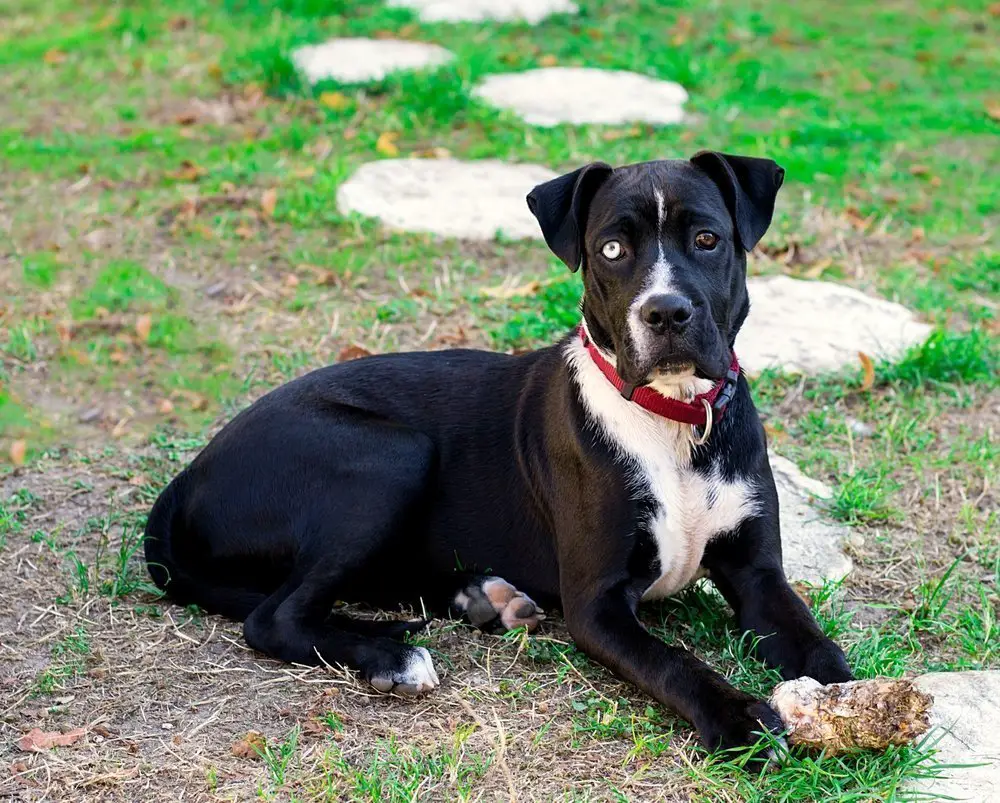
The Pitbull Boxer Mix, often called a Bullboxer or Boxer Pitbull Mix, is usually an athletic, people-focused dog with a short coat, a muscular build, and a big need for daily activity. This mix can be a wonderful companion for the right home, but it is not a low-effort dog. Most Bullboxers do best with owners who can provide structure, exercise, early socialization, and calm, consistent training.
If you are comparing several Pitbull-type mixes, start with our Pitbull mix breeds guide and then use this guide to decide whether the Boxer influence makes this mix a good fit for your family.
Quick Answer: What should you know about the Pitbull Boxer Mix?
A Pitbull Boxer Mix is a cross between a Boxer and a Pitbull-type dog, most often an American Pit Bull Terrier, American Staffordshire Terrier, Staffordshire Bull Terrier, or similar bully-type breed. The result is commonly a medium-to-large, muscular, high-energy companion that tends to be affectionate with its people and needs daily exercise, training, and socialization.
This mix is best for active owners who want an involved family dog, not a dog that will be content with short potty walks and no mental work. A Bullboxer may fit families with children when the dog is well-socialized and interactions are supervised, but its strength and enthusiasm can be too much for very small kids or frail adults if manners are not trained early.
Quick Facts About the Bullboxer
| Trait | Typical expectation |
|---|---|
| Other names | Bullboxer, Boxer Pitbull Mix, Boxer Pit Mix, Pitoxer |
| Size | Usually medium to large; adult size varies by parents |
| Build | Muscular, athletic, broad-chested, powerful |
| Coat | Short, smooth coat; low to moderate grooming needs |
| Energy level | High; needs daily physical and mental exercise |
| Temperament | Often affectionate, playful, alert, and people-oriented |
| Training needs | Consistent positive training, leash manners, impulse control |
| Family fit | Best for active homes that can supervise kids and manage a strong dog |
| Grooming | Weekly brushing, nail trims, dental care, ear checks |
| Health approach | Vet checkups, weight control, parent-breed screening where possible |
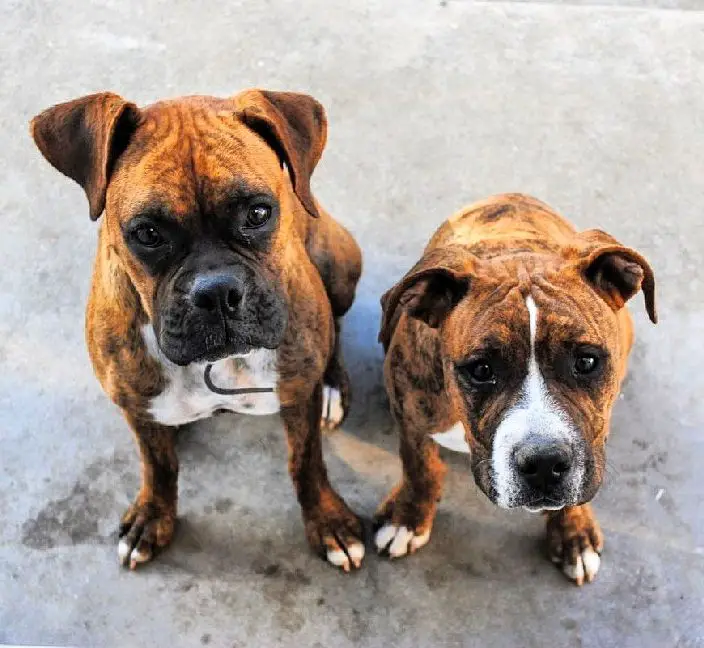
What Is a Pitbull Boxer Mix?
A Pitbull Boxer Mix is not a standardized purebred dog. It is a mixed-breed dog with one Boxer parent and one Pitbull-type parent, or it may come from generations of similar Boxer-bully crosses. Because “Pitbull” is an umbrella term rather than one single breed, Bullboxers can vary in size, head shape, drive, and temperament.
That variation is why the best way to judge an individual Bullboxer is by the actual dog in front of you: its parents when known, its health history, its behavior, its socialization, and its daily environment. Parent-breed labels can help you predict possibilities, but they cannot guarantee personality or adult size.
Appearance and Size
Most Pitbull Boxer Mix dogs look strong, compact, and athletic. Many have a broad chest, defined shoulders, a short muzzle compared with some breeds, and a short coat that is easy to maintain. Some look more like a Boxer, while others lean more toward the Pitbull-type side.
Adult size can vary. Many Bullboxers land in the medium-to-large range, but genetics, sex, nutrition, neuter/spay timing, and health all matter. If exact adult size is important for housing, travel, or landlord rules, ask for the parents’ weights and look at the dog’s current growth pattern rather than relying on a single internet estimate.
Common coat colors may include brindle, fawn, brown, black, white, tan, or combinations with white markings. Coat color does not predict temperament, trainability, or health.
Temperament: What Is a Bullboxer Like?
A well-raised Pitbull Boxer Mix is often affectionate, playful, and very attached to family. Boxer influence may add clownish, bouncy energy, while the Pitbull-type side may add confidence, persistence, and strong people focus. That combination can be rewarding for engaged owners and overwhelming for owners who want a hands-off dog.
Temperament is shaped by more than breed mix. Genetics, early handling, socialization, training, exercise, health, pain, fear, and the home environment all affect behavior. Avoid anyone who promises that a Bullboxer puppy will be automatically protective, automatically safe, or automatically aggressive. Responsible ownership matters more than stereotypes.
Because this is a strong dog, manners are not optional. Teach calm greetings, leash walking, recall, “drop it,” “leave it,” and settling around guests. Reward-based training and clear routines usually work better than harsh corrections, which can create fear or frustration.
Is a Pitbull Boxer Mix Good for Families?
A Pitbull Boxer Mix can be a good family dog when the household is active, consistent, and realistic. Many Bullboxers enjoy being around people and can bond deeply with children. However, their strength, jumping, and excitement can accidentally knock over small kids, so supervision and training are essential.
Good family fit usually means:
- Adults are committed to daily exercise and training.
- Children learn not to climb on, tease, startle, or bother the dog while eating or sleeping.
- The dog has a quiet place to rest away from chaos.
- Play is supervised, especially with young children or visiting kids.
- The household can manage leash strength and local breed rules.
If you want a similar active family companion with a different parent-breed influence, compare this guide with our Pitbull Lab Mix guide and Pitbull Beagle Mix guide.
Training and Socialization
Start training a Bullboxer early, but do not stop when puppy class ends. This mix often needs lifelong practice with impulse control, leash manners, polite greetings, and calm behavior around distractions. Short, upbeat sessions work well because energetic dogs can become frustrated when training is too long or unclear.
Socialization should be positive and controlled. Expose the dog to different people, surfaces, sounds, vehicles, handling, and environments at a pace the dog can handle. Socialization does not mean forcing the dog into crowded dog parks or letting strangers overwhelm it. The goal is confidence, not chaos.
Prioritize these skills:
- Name response and recall.
- Loose-leash walking with a secure best harness for Pitbulls.
- “Sit,” “down,” and “stay” for impulse control.
- “Leave it” and “drop it” for safety.
- Calm crate or mat rest.
- Cooperative handling for nails, ears, and vet visits.
Exercise Needs
A Pitbull Boxer Mix usually needs substantial daily exercise. Many adults do well with a mix of brisk walks, structured play, training games, sniffing, tug with rules, fetch where appropriate, and puzzle feeders. Mental exercise matters because a bored Bullboxer may invent its own entertainment through chewing, digging, barking, or rough play.
Adjust exercise to the dog’s age, conditioning, weather, and health. Puppies should not be overworked with forced running, and older dogs may need gentler routines. Boxers can be sensitive to heat because of their head and muzzle structure, so avoid intense exercise during hot weather and watch for signs of overheating.
If your main concern is extreme energy, also compare the Pitsky guide, because Pitbull Husky mixes may be even more demanding for exercise and escape-proof management.
Grooming and Shedding
Bullboxers are usually fairly easy to groom. Their short coat often needs weekly brushing to remove loose hair and spread natural oils. They may shed more during seasonal changes, but they are not usually heavy-coated dogs.
Routine care should also include:
- Nail trims before nails become long and painful.
- Tooth brushing or vet-approved dental care.
- Ear checks, especially after swimming or allergies.
- Skin checks for bumps, irritation, or hot spots.
- Bathing as needed, not so often that the skin dries out.
A short coat does not mean zero maintenance. Skin, ears, nails, and weight still need regular attention.
Feeding and Weight Management
Feed a Pitbull Boxer Mix a complete and balanced dog food appropriate for its life stage, size, body condition, and activity level. Active dogs need enough calories to maintain muscle, but overfeeding can still lead to obesity. Extra weight can make joint, heart, and mobility problems worse, so use body condition rather than the food bag alone to judge portions.
For many bully-type mixes, a measured feeding routine works better than free-feeding. Treats should be counted as part of daily calories, especially during training. If your dog has allergies, digestive issues, heart concerns, pancreatitis history, or unexplained weight changes, ask your veterinarian before changing diets or adding supplements.
For more nutrition context, see our guide to the best dog food for Pitbulls. Be especially careful with boutique, exotic-ingredient, or grain-free diets unless your veterinarian recommends them for a specific reason.
Health Risks to Discuss With Your Veterinarian
A mixed-breed dog can inherit health risks from either parent line. A Bullboxer is not guaranteed to have these problems, but responsible owners should know what to watch for and keep up with preventive care.
Possible concerns to discuss with a veterinarian include:
- Hip or elbow problems.
- Skin allergies or chronic itchiness.
- Heart disease, including issues seen in some Boxer lines.
- Certain cancers that are more discussed in Boxer health contexts.
- Bloat risk in deep-chested dogs.
- Obesity and joint strain.
- Dental disease.
- Heat intolerance during intense exercise or hot weather.
Ask rescues or breeders for any available health history, veterinary records, and parent testing. Regular checkups, vaccinations, parasite prevention, dental care, and healthy weight management are more useful than guessing based on appearance alone.
Pros and Cons of the Pitbull Boxer Mix
Pros
- Often affectionate and people-focused.
- Athletic enough for active owners.
- Short coat is usually easy to maintain.
- Can be playful and entertaining.
- May be highly trainable with consistent positive methods.
Cons
- High energy can be too much for inactive homes.
- Strength and enthusiasm require leash manners and impulse control.
- May face housing, insurance, or local breed-rule restrictions.
- Can become destructive if bored or under-exercised.
- Health and temperament vary widely by parent lines and upbringing.
Is a Pitbull Boxer Mix Right for You?
A Bullboxer may be right for you if you want an active, affectionate dog and you can commit to training, daily exercise, socialization, routine vet care, and responsible management. This mix is usually a better fit for people who enjoy working with their dog than for people who want a low-energy companion.
Think carefully before choosing this mix if you have very limited time, weak leash handling, strict breed restrictions, or no plan for exercise during bad weather. Also consider whether your household can handle a strong adolescent dog, not just a cute puppy.
Adoption can be a good route because many rescues and shelters can describe an individual dog’s adult size, energy level, and behavior more accurately than a puppy listing can. If buying from a breeder, ask about health testing, parent temperament, socialization, contracts, and return policies.
Similar Pitbull Mixes to Compare
If the Bullboxer sounds close but not perfect, compare it with these related ABD guides:
- the main mix-breed comparison hub — the parent hub for comparing the main mix-breed comparison hub.
- the Labrador-influenced comparison — often a good comparison for active families who like retriever traits.
- the Beagle-influenced comparison — useful if you are considering a smaller but still energetic mix.
- the Husky-influenced comparison — compare if you want a very active dog and can manage Husky-style energy.
- Pitweiler guide — compare if you are researching stronger guardian-style Pitbull mixes.
FAQs About the Pitbull Boxer Mix
Is a Pitbull Boxer Mix a good family dog?
A Pitbull Boxer Mix can be a good family dog in the right home. Many are affectionate, playful, and people-oriented, which can make them enjoyable companions for active families. The key phrase is “right home,” because this is usually a strong, energetic dog that needs structure.
Families should supervise interactions with children, teach kids respectful dog manners, and train the dog not to jump, mouth, or play too roughly. A Bullboxer that receives exercise, socialization, and consistent training is much easier to live with than one that is left bored and unmanaged.
How big does a Bullboxer get?
Most Bullboxers are medium-to-large dogs, but exact adult size varies because the mix is not standardized. A dog with a large Boxer parent and a large Pitbull-type parent may mature bigger than one from smaller parent lines.
If you are adopting a puppy, ask about the parents’ sizes when possible. If you are adopting an adult, judge the dog in front of you rather than relying on breed-label averages. Adult weight should also be assessed by body condition, not just the number on the scale.
Are Pitbull Boxer Mixes aggressive?
No breed mix should be labeled automatically aggressive or automatically safe. A Pitbull Boxer Mix’s behavior depends on genetics, early experiences, socialization, training, health, handling, and environment. Pain, fear, poor management, and lack of training can create behavior problems in any strong dog.
Responsible owners should focus on prevention: positive training, safe introductions, supervision around children and other pets, secure containment, and veterinary care if behavior suddenly changes. Avoid trainers or sellers who rely on fear-based stereotypes or guarantee a specific temperament.
How much exercise does a Pitbull Boxer Mix need?
Most adult Bullboxers need daily exercise plus mental enrichment. That may include walks, training games, structured play, sniffing time, puzzle feeders, and calm practice. A quick walk around the block is usually not enough for a young, healthy adult.
Exercise should match the dog’s age and health. Puppies, seniors, overweight dogs, and dogs with orthopedic or heart concerns need a veterinarian-guided plan. In hot weather, keep exercise cooler and shorter, especially for dogs with Boxer-like facial structure.
Can a Pitbull Boxer Mix live in an apartment?
A Pitbull Boxer Mix can live in an apartment if the owner provides enough exercise, training, and enrichment outside the apartment. The bigger issue is not square footage by itself; it is whether the dog’s energy, noise, strength, and management needs are being met.
Before bringing one home, check lease rules, insurance restrictions, local breed laws, elevator/hallway logistics, and where the dog will exercise safely. A tired, well-trained Bullboxer is much easier in shared housing than an under-exercised one.
Is the Bullboxer easy to train?
Many Bullboxers are smart and eager to interact, which can make training rewarding. However, they can also be strong, excitable, and persistent, so inconsistent rules can create problems quickly. Start with simple behaviors and build gradually around distractions.
Use rewards, clear boundaries, and short sessions. Focus on leash skills, recall, calm greetings, and impulse control. If the dog shows reactivity, fear, or intense pulling, work with a qualified positive-reinforcement trainer before the behavior becomes harder to manage.
What health problems can Pitbull Boxer Mixes have?
A Pitbull Boxer Mix may inherit health risks from either parent side. Owners should discuss joint issues, skin allergies, heart concerns, weight management, dental care, bloat risk, and Boxer-associated health concerns with a veterinarian.
This does not mean every Bullboxer will be unhealthy. It means you should choose rescues or breeders carefully, request health records when available, keep the dog at a healthy weight, and schedule routine veterinary care instead of waiting for symptoms to become severe.
What should a Pitbull Boxer Mix eat?
Most Bullboxers should eat a complete and balanced diet matched to their life stage and body condition. Active dogs may need enough protein and calories to maintain lean muscle, but too many calories can still cause unhealthy weight gain.
Measure meals, monitor body condition, and adjust portions with your veterinarian’s guidance. If you are considering grain-free, raw, homemade, or supplement-heavy diets, talk to a veterinarian first, especially because diet-related heart-health questions have been investigated by the FDA.
Do Pitbull Boxer Mixes shed?
Yes, most Pitbull Boxer Mix dogs shed at least moderately. Their short coat can make shedding less obvious than a long-haired breed, but loose hair still appears on clothing, furniture, and floors.
Weekly brushing helps control shedding and gives you a chance to check the skin for irritation, lumps, or parasites. Regular nail, dental, and ear care should be part of the same routine.
Where can I find a Pitbull Boxer Mix?
Many Bullboxers and similar bully-Boxer mixes are available through shelters and rescues. Adoption can be especially helpful because staff or foster homes may already know the dog’s adult size, behavior, energy, and compatibility with children or other pets.
If you choose a breeder, look for transparency. Ask about parent health, temperament, socialization, veterinary care, contract terms, and whether the breeder will take the dog back if your circumstances change. Avoid sellers who cannot answer basic questions or pressure you to buy quickly.
Sources Checked
- AKC Boxer breed overview: https://www.akc.org/dog-breeds/boxer/
- AKC American Staffordshire Terrier overview: https://www.akc.org/dog-breeds/american-staffordshire-terrier/
- AVMA responsible pet ownership: https://www.avma.org/resources-tools/pet-owners/petcare/responsible-pet-ownership
- VCA Hospitals obesity in dogs: https://vcahospitals.com/know-your-pet/obesity-in-dogs
- FDA questions and answers on non-hereditary DCM in dogs: https://www.fda.gov/animal-veterinary/animal-health-literacy/questions-answers-fdas-work-potential-causes-non-hereditary-dcm-dogs
- ASPCA dog care: https://www.aspca.org/pet-care/dog-care