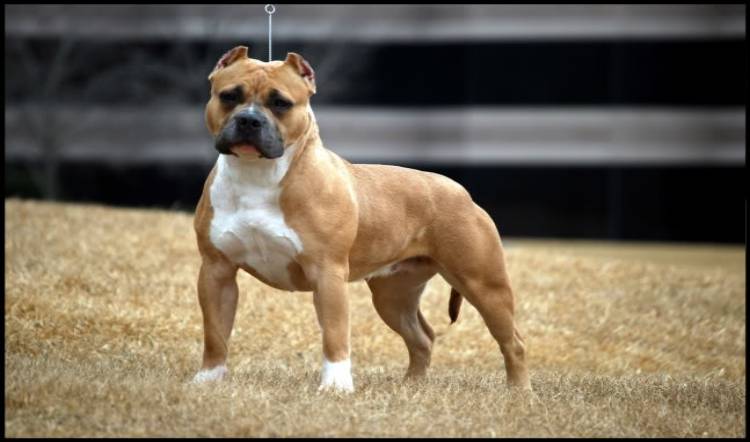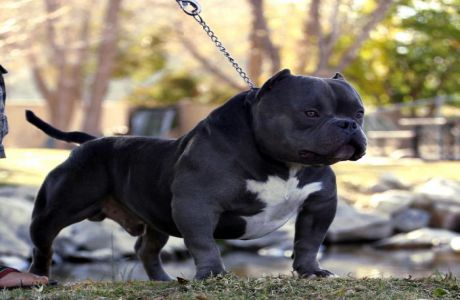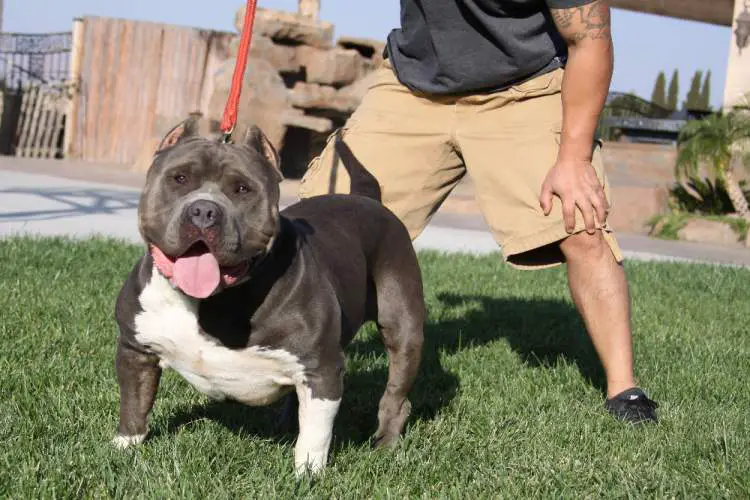

The American Bully XXL is not an officially recognized size class — no major registry, from the American Bully Kennel Club (ABKC) to the United Kennel Club (UKC), lists it on a breed standard. What breeders sell as “XXL” is a dog bred past the top of the recognized XL range. Understanding that distinction is the difference between buying a healthy, standard-conforming dog and buying into a marketing label with real welfare and legal consequences attached.

Bully-type dog breeds share a family resemblance — broad chest, muscular build, blocky head — and the American Bully carries all of it. But “XXL” gets used loosely online, and it’s worth clearing up before you compare a dog against it.
Is “XXL” a Real American Bully Size Class?
No. Neither the ABKC nor the UKC lists an XXL class anywhere in their published standards. The ABKC recognizes four official sizes — Pocket, Standard, Classic, and XL — and the UKC recognizes three, folding Standard and Classic together. “XXL” is a term breeders coined for dogs sitting at or beyond the top of the XL range, and a petition asking the ABKC to formally create the class exists precisely because it doesn’t currently exist.
It’s a common mix-up online: a dog gets described as “the biggest Bully” while the quoted measurements — under 17 inches for males, under 16 inches for females at the withers — are actually the ABKC’s Pocket standard, the smallest official class. If you see those numbers attached to a claim about the largest Bully variety, that’s the tell that the source has the size ladder backwards.
American Bully Size Classes Compared
An ABKC XL male stands over 20 inches at the withers — the tallest height either major registry puts a number on. Here’s how the four ABKC classes break down, measured at the withers (the highest point of the shoulder blades):
| Class | Males | Females | Build |
|---|---|---|---|
| 14″–17″ (36–43cm) | 13″–16″ (33–40cm) | Standard build, shorter legs | |
| Standard | 17″–20″ (43–51cm) | 16″–19″ (40–48cm) | Heavily muscled, massive, bulky |
| Classic | 17″–20″ (43–51cm) | 16″–19″ (40–48cm) | Lighter frame, less body mass, same height as Standard |
| XL | over 20″–23″ (51–57cm) | over 19″–22″ (48–54cm) | Taller than Standard, heavily muscled |
| “XXL” (unofficial) | over 23″ | over 22″ | Not a recognized class in any registry |
The official ABKC breed standard is the source for those numbers, and the UKC standard lines up closely, just without splitting Standard and Classic into separate classes. If you’re trying to place a specific dog, the five official American Bully size classes covers the breakdown in more depth. If a Pocket-sized dog is more your speed, the Pocket American Bully at the opposite end of the size ladder is worth a look before you commit to a giant-frame dog. The Classic Bully and the Standard Bully are both the same height as each other — the difference is bone and muscle mass, not stature.
Why Registries Don’t Recognize — and Some Disqualify — Oversized Bullies
The UKC standard doesn’t just stay silent on oversized dogs — it actively disqualifies them. Its height and size disqualifications name “overly massive dogs” outright, and the standard’s preamble states plainly: “Quality is never to be sacrificed in favor of size and mass,” adding that the UKC “is unwilling to condone the validity of using exaggerated specimens of this breed in a breeding program.” A disproportionate chest wide enough to interfere with movement, or a muzzle short enough to interfere with breathing, are both listed as eliminating faults.
That reframes a claim you’ll see repeated elsewhere: that XXL-sized dogs lose at conformation shows because they’re “hard to breed.” The real reason is more direct — a dog built past the standard isn’t merely at a disadvantage, it’s disqualifiable by definition. Pocket, Classic, and Standard dogs dominate show wins because they’re built to the standard, not because oversized dogs are simply unlucky in the ring. Bully-type dogs attract a lot of size-record fascination generally — the biggest Pitbull in the world, Hulk, is a good example of how that fixation plays out in a related breed. But for a dog you’re planning to register and show, size past the standard works against you, not for you.
Build, Coat, and Temperament

An American Bully’s coat is short, glossy, and close to the body — run a hand over one and it’s almost bristle-stiff, not soft. The skull is broad with pronounced cheek muscle, the jaw set strong and well-defined, and the chest deep and wide with the ribs held close together. Skin sits tight, without the loose folds you’d see on a bulldog. Eye color varies dog to dog, but albino coloring, solid merle coats, and blue eyes are all listed as disqualifying faults in the breed standard — worth knowing if you’re evaluating a puppy against registry paperwork rather than just looks.
Temperament is where the breed earns its reputation: affectionate, stable, and notably tolerant of strangers, which is exactly what you see in the photo above — dogs that lean into people rather than away from them. That friendliness is also the most common thing new owners underestimate about a 100+ lb dog: a Bully that jumps up to greet you the same way it did as a 20 lb puppy is a training problem you want to get ahead of early, not something to correct once the dog is fully grown.
Where the American Bully Came From
The American Bully was developed in the 1980s, with the breed’s current look and temperament largely settled through the 1990s. The ABKC standardized and recognized it as a distinct breed in 2004, and the UKC followed on 15 July 2013. Its foundation stock traces back to the American Pit Bull Terrier, with later infusions of American Bulldog, English Bulldog, and Olde English Bulldogge shaping the heavier build. That mixed ancestry is also why the breeds get confused for each other — if you want the fuller comparison, this Pitbull dogs guide covers temperament, size, and health differences across the wider Pit Bull–type family.
Health Risks That Come With Oversizing
Oversizing carries real physical cost, and most of it traces back to the same broad, heavy conformation the breed standard already flags. Hip and elbow dysplasia are documented orthopedic risks in large, heavy-breed dogs generally — VCA’s veterinary reference on hip dysplasia covers how excess growth rate and excess body weight worsen outcomes. A Bully pushed well past the XL ceiling is carrying more frame weight on the same joint structure. The UKC’s own eliminating faults — a chest so wide it interferes with movement, a muzzle so short it interferes with breathing — are registry-documented welfare concerns, not outside opinion.
Heavy frames and shorter muzzles also make it harder for a dog to shed heat, so hot weather hits oversized Bullies harder — see how to keep an American Bully cool in summer.
One figure worth avoiding: you’ll see a specific hip and elbow dysplasia percentage repeated across breeder blogs. It isn’t independently verifiable against current data, so don’t treat it as fact — check the Orthopedic Foundation for Animals’ live breed statistics yourself if screening rates matter to your decision. Similarly, claims that oversized Bullies live shorter lives than standard-sized ones sound plausible but aren’t backed by any study isolating size class within the breed — treat that as unproven rather than settled. Any health or care decision at this scale is worth running past your own vet rather than a breeder’s sales pitch.
Feeding and Exercise for a Giant-Frame Puppy
A giant-frame Bully puppy needs a large-breed puppy formula, not an adult food or a standard puppy formula scaled up — the calcium and calorie ratios are different specifically to slow growth to a rate the skeleton can keep up with. Overfeeding calories or calcium to accelerate growth is a recognized risk factor for permanent joint damage, because the frame outgrows the joints’ ability to support it. This Pitbull feeding guide and this American Bulldog feeding guide both cover large-breed formula selection in more detail and translate reasonably well to a Bully of similar size.
Exercise matters just as much while growth plates are still open. Skip weighted pulling, road running, and repeated jumping in a puppy under roughly 18 months — low-impact play and controlled leash walks protect joints that haven’t finished developing. Push a young, heavy-framed dog too hard too early and the damage from that window doesn’t reverse later.
Are XL Bullies Banned? UK Legal Status
Yes, in England and Wales. The XL Bully type was added to the Dangerous Dogs Act 1991, with the ban phased in from 31 January 2024 for exemption applications and enforced from 1 February 2024. The UK’s official conformation standard defines an XL Bully by height — adult males from 20 inches at the withers, adult females from 19 inches — which means a dog marketed as “XXL” sits squarely inside the banned type by definition, not at its edge.
Owners of exempted dogs must keep the dog muzzled and on a lead in public (held by someone 16 or older), keep it at the address on the exemption certificate, and have it neutered. From 1 November 2026, exempted owners also won’t be allowed to leave a child under 12 alone with the dog in a private space without adult supervision. By December 2024, roughly 59,500 XL Bullies were registered under exemption across England, Wales, and Scotland. This is current UK government guidance — read it directly if you’re buying, importing, or currently own a dog that could fall under this definition, since the rules are still being phased in.
What Are You Actually Being Sold? A Buyer’s Checklist
If a breeder is advertising an “XXL” Bully, run this before any money changes hands:
- Measure at the withers. The withers is the highest point of the shoulder blades, not the top of the head. A male over 23 inches or a female over 22 inches sits outside every recognized class in both major registries.
- Ask which registry and which class. “XXL” is not a valid answer — it should be Pocket, Standard, Classic, or XL, with paperwork to back it.
- Ask for hip and elbow scores on both parents. No scores means no data, not “clean.”
- Ask for a cardiac evaluation on the parents. Heavy-breed dogs carry cardiac risk alongside joint risk.
- Check for outcrossing to a giant breed if the height claimed is far past the XL ceiling — that’s often how “XXL” size gets manufactured.
- If you’re in England or Wales, confirm the dog’s legal status first. A dog built to XL-and-beyond dimensions may already fall under the ban.
For the breeding and buying side of this more broadly, picking an American Bully bloodline built for structure, not size and vetting a reputable American Bully breeder both walk through what a straight answer to these questions actually looks like. It also helps to know which organizations set the rules you’re checking a breeder against — the American Bully kennel clubs that actually set the standard covers that ground.
Frequently Asked Questions
Is an XXL Bully the same as a Pit Bull?
No. The American Bully is a distinct breed descended partly from the American Pit Bull Terrier, with American Bulldog, English Bulldog, and Olde English Bulldogge in its ancestry. Size doesn’t change that classification either way.
How much does an XXL Bully weigh?
Weight across the American Bully breed generally ranges from about 44 to 132 lb, with dogs bred past the XL height ceiling typically sitting at the high end or beyond it.
How long do American Bullies live?
Lifespan figures for the breed are largely blog-sourced rather than backed by formal study, so treat any specific number as an estimate rather than a guarantee — and don’t assume oversized dogs live as long as standard-sized ones, since no study has isolated that comparison.
Can an XXL Bully be registered with the ABKC or UKC?
It can be registered as an XL if it falls within that class’s height range. Past that, there’s no class to register it under, since neither registry recognizes an XXL size.
Are XXL Bullies aggressive?
Temperament and size are separate traits — the breed standard describes a stable, people-friendly dog regardless of class. Size does raise the physical stakes of poor training or poor socialization, which is a handling issue, not a temperament trait of the size itself.
How much should I feed an XXL Bully puppy?
Feed a large-breed puppy formula at the amount the food’s growth-rate guidelines specify for the dog’s current weight, not an amount aimed at reaching adult size faster — controlled growth protects the joints.
Can XXL Bullies compete in dog shows?
Not successfully under either major registry’s standard. A dog built past the XL ceiling risks disqualification under the UKC’s “overly massive dogs” rule rather than simply losing on points.
Conclusion
“XXL” describes a dog bred past the top of the American Bully’s official size range — not a recognized class, and in the UK, not even a legal one. The core takeaway for a buyer: measure at the withers, ask for registry paperwork and health screening on the parents, and treat “XXL” as a marketing term rather than a mark of quality. If you’re set on a giant-frame Bully, look for one that tops out within the ABKC or UKC’s XL standard, comes from a breeder who can produce hip, elbow, and cardiac results, and talk to your vet about growth-rate feeding before the puppy comes home.